Operations | Monitoring | ITSM | DevOps | Cloud

Why you don't just buy tools to make DevOps happen

Matt Gordon is a Microsoft Data Platform MVP and the Director of Data and Infrastructure at Rev.io. The sophisticated billing-as-a-service (BaaS) platform provides online billing software to communications companies, IoT businesses, and technology service providers. Matt’s role, first and foremost, involves keeping the lights on while at the same time overseeing many data-related projects, from architecture to performance tuning and DevOps implementation.
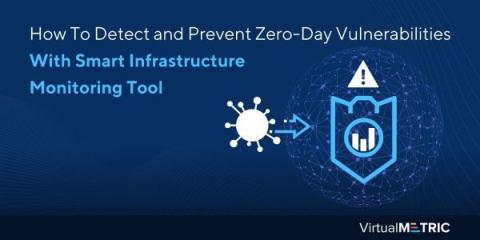
How To Detect and Prevent Zero-Day Vulnerabilities With Smart Infrastructure Monitoring Tool

“End of life, end of support, pandemic-induced shipping delays and remote work, scanning failures: It’s a recipe for a patching nightmare.”, federal cybersecurity CTO Matt Keller says. Ensuring a high level of security for your IT infrastructure and being sure you have not missed something is hard to arrange during these days. A zero-day exploit happens when hackers identify a software weakness or a security gap and take advantage of it to perform a cyberattack.

Introducing Grafana k6 Cloud for Education, a free program to help teach performance testing

Grafana k6 is our open source tool to help you ship reliable applications by doing performance testing in a modern and developer-friendly way. Performance testing is still unknown to many, but it is not a new topic. In fact, performance testing courses are everywhere — even at colleges and universities. One of our passions is to educate others on the best practices of performance testing, working together with the Grafana k6 community.

Should you use Kubernetes for your Startup?

Developers love containers for their portability and flexibility. Suitable for today’s cloud-native environment and agile development requirements, containers make it super-fast to develop, test, and run applications. Besides this, they are lightweight and can optimize the platform (and the host OS) they are deployed on. Now, for powerful applications with hundreds of containers, the platform should also be portable, flexible, extensible, and efficient.

Enhanced Network Monitoring with Progress Flowmon

Ensuring that networks and the applications they enable are performing as well as they should is a full-time and challenging task for system administrators. We've all encountered scenarios in which end-users complain that an application is slow. Then the network team says it's not their problem, and the development team (or third-party application vendor) also says it's not their problem either.

Get Started with ChatOps with "7 Steps to ChatOps for Enterprise Teams"

The right tools enable your team to ship amazing code quickly. But between building, deploying, testing, monitoring, and maintaining software, all those great tools can create a lot of stuff to keep track of. Luckily, there’s a solution to this problem: ChatOps. ChatOps is a collective approach to running DevOps workflows and building a collaborative team culture.

Updates to Dashboards and Stats

Between planning, triaging tickets, negotiating requirements with external stakeholders, and actually building software, it’s hard to take the time to make dashboards or even think about the most important metrics your team needs to track. To make it easier for you to get insights into your team effectiveness and project health, we made a few updates to Dashboards and Stats that you just might like.

How to Effectively Track and Audit Your Assets with RFID Tags?

An audit is an inevitable activity that needs to be done at the end of the financial year. Usually, audits are long and hectic because of assets are in different-different locations and summoning them is important for audit. But when assets are tagged or labeled with asset tracking technology such as RFID then audit becomes quite simpler and easier. Therefore, we can say that RFID technology is an ally for the organization. In this blog, we will know how RFID is helpful in the asset audit process.

A Day in the Life of a DevOps Engineer

In the past five years, DevOps adoption has almost doubled. In fact, 74 percent of companies now use DevOps in some form. As a growing number of organizations seek to implement DevOps practices, the need for qualified DevOps engineers is soaring. But what exactly does a DevOps engineer do, and what skills are required to succeed in this in-demand role?