Operations | Monitoring | ITSM | DevOps | Cloud

Introducing Cloud Native Observability

The term ‘cloud native’ has become a much-used buzz phrase in the software industry over the last decade. But what does cloud-native mean? The Cloud Native Computing Foundation’s official definition is: From this definition, we can differentiate between cloud-native systems and monoliths which are a single service run on a continuously available server. Like Amazon’s AWS or Google Azure, large cloud providers can run serverless and cloud-native systems.

Logz.io Vulnerability Insights: Confluence Server and Cosmos DB Reports

“Security is always seen as too much until the day it’s not enough.” – William H. Webster, former FBI Director As we all know, every year, thousands of new vulnerabilities are discovered, requiring organizations to patch operating systems, update applications, and reconfigure security settings throughout the entirety of their IT environments, including the cloud.

Config best practices: dependency caching

Let’s face it: Creating the optimal CI/CD workflow is not always a simple task. In fact, writing effective and efficient configuration code is the biggest hurdle that many developers face in their DevOps journey. But you don’t need to be an expert to set up a fast, reliable testing and deployment infrastructure. With a few straightforward techniques, you can optimize your config.yml file and unleash the full potential of your CI/CD pipelines.

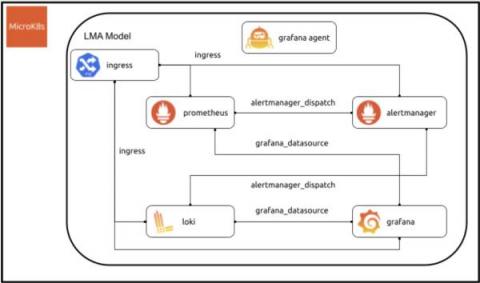
"Open source done right": Why Canonical adopted Grafana, Loki, and Grafana Agent for their new stack

Michele Mancioppi is a product manager at Canonical with responsibility for observability and Java. He is the architect of the new system of Charmed Operators for observability known as LMA2. Jon Seager is an engineering director at Canonical with responsibility for Juju, the Charmed Operator Framework, and a number of Charmed Operator development teams which operate across different software flavors including observability, data platform, MLOps, identity, and more.

A CTO's View: Driving Continuous Alignment with Mattermost 6.0

The past few weeks have marked a real milestone for the Mattermost community. My co-founder and longtime colleague, Ian, shared his reflections on our huge v6.0 launch, and I echo his take on the magnitude of the launch and our new product capabilities. As CTO at Mattermost, I have the unique pleasure of leading product development efforts for an open source platform backed by an inspiring community of contributors and enthusiasts.

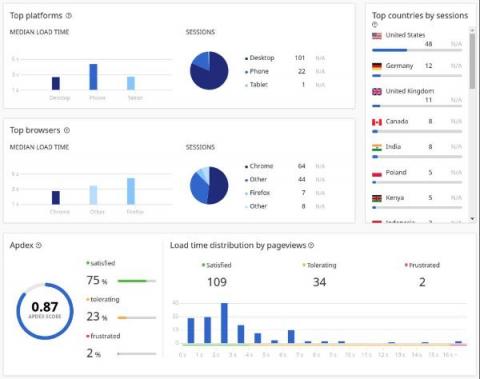
How Pingdom's Real User Monitoring Can Help Optimize Your WordPress Website

Enterprise web applications or medium-to-large, consumer-facing websites are typically built by teams of engineers, administrators, web developers, and other professionals. However, once a site goes live, the operations team is responsible for keeping the site up and running at optimal performance. Online users aren’t forgiving, often abandoning a site as soon as they encounter an issue with functionality, complexity, or performance.

Working With the WordPress REST API

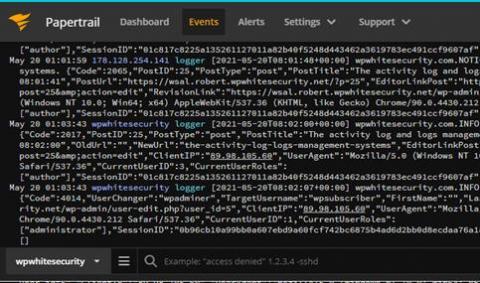
Logging is an important part of every software application. In addition to capturing user activity, well-structured logs can make it easier to debug problems should they occur. But if your application is split up across several different subsystems, collecting and analyzing disparate logs can be a real challenge. Picture this scenario: You work at a startup that uses a CMS managed by a few admins. You also have a standalone front-end application for users to communicate with your platform via an API.

App Control for Linux Opens Up a Whole New World

Ivanti Application Control is known for enabling IT control over endpoints, reducing security risk, and providing a great user experience. Up to now, that experience has always been for users of Windows environments. But with the introduction of Ivanti App Control for Linux, we are opening up a whole new world of possibilities. Ivanti Application Control for Linux brings the major benefits of App Control for Windows to Linux environments.

Changes In Technology: How Catchpoint Monitors And Observes The Internet, From 2008 To Today

Last month, Catchpoint celebrated its 13th birthday, a milestone which has us feeling more than a little nostalgic. As we embark on our teenage years as a company, we have also been looking back and reflecting on all the changes the world of technology has seen since Catchpoint was “born” back in 2008. The world looks very different today than it did at our founding and, for that matter, so do we!