Operations | Monitoring | ITSM | DevOps | Cloud

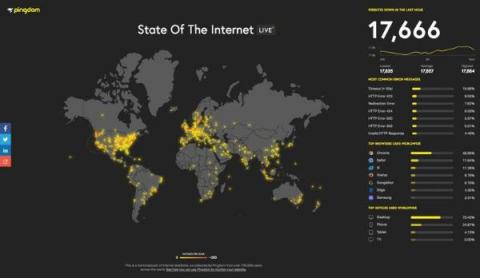
Web Performance of the World's Top 50 Blogs

Am I the only one who thinks blogs were in their prime in the mid-2010s, before the internet began consuming content at wicked fast rates (thanks, Instagram and TikTok)? When someone says the word blog, I think of the chokehold 2015 southern American female fashion bloggers had on the internet. Pure pumpkin spice latte fashion. And though those blogs have, probably for the best, slipped away from the limelight, blogs are still alive and well.

CVE-2020-27304 - RCE via Directory Traversal in CivetWeb HTTP server

JFrog has recently disclosed a directory traversal issue in CivetWeb, a very popular embeddable web server/library that can either be used as a standalone web server or included as a library to add web server functionality to an existing application. The issue has been assigned to CVE-2020-27304.

A Candid Conversation about a Career in Cybersecurity: Q&A with Daniel Spicer

This week is Cybersecurity Career Awareness Week, which is part of October’s Cybersecurity Awareness Month. We sat down with Daniel Spicer, chief security officer at Ivanti, to learn more about what it’s like to work in the cybersecurity world.

Uptime/SLA calculator: what is an SLA and how to calculate it?

A Service Level Agreement (SLA) is a document that details the expected level of service guaranteed by a vendor or product. This document generally sets out metrics such as uptime expectations and any payoffs if these levels are not met. For example, if a provider advertises an uptime of 99.9% and exceeds 43 minutes and 50 seconds of service downtime, technically the SLA has been breached and the customer may be entitled to some type of remuneration depending on the agreement.

Vendor Switching With OpenTelemetry (OTel)

You might already know that OpenTelemetry is the future of instrumentation. It’s an open-source and vendor-neutral instrumentation framework that frees you from the trap of using proprietary libraries simply to understand how your code is behaving. Best of all, you can instrument your applications just once and then take that instrumentation to any other backend system of your choice. This blog shows you exactly how to use OpenTelemetry to ✨break the vendor lock-in cycle.✨

OpsRamp, TietoEVRY Partner to Speed AIOps Adoption in Nordics

Managed service providers have to manage complex and diverse customer environments that typically include hybrid infrastructure and multiple monitoring feeds. They need to be able to discover and monitor these environments, correlate alerts from multiple systems into single events, and map business services to the infrastructure and application services that support them, building customer-centric dashboards for real-time service and application health in the process.

Creating better end-to-end experiences in healthcare and life sciences

COVID-19 has impacted every industry, but perhaps none more than healthcare and life sciences. From how and where healthcare is provided to the speed of developing and administering vaccines, there has been massive disruption to the way healthcare and life sciences organizations operate. But the crisis also provided unprecedented opportunities to reexamine and transform.

Top SysAdmin Tools (That Aren't Software!)

This article was born of necessity. Chatting with my editors at Auvik, I went looking to see what kinds of advice other sites had on SysAdmin tools you should have handy to do your job. Two things immediately struck me: Now don’t get me wrong, software is important to have. But what if you can’t access that device to use the software? What if there’s a (gasp!) physical issue that needs to be addressed, and you have to get some hands-on time with some racks?

The Future of Sumo Logic Observability

I have always found data collection to be a fascinating area of work at Sumo Logic. Collecting data is a critical first step for all the solutions we develop for our customers. After all, to observe the health and performance of your applications, you must first collect all relevant data. It's also an area that has seen some significant activities by the open-source community over the years, which is completely changing the landscape of observability as we know it.

Adapting Legacy Systems to a Stream-Based Platform

In a perfect world, small pieces of software scale up and down with a high-performance message broker like a heart, pumping data in a controlled, efficient manner. However, at some point, in every single system, an application starts pumping out large data requests, in a sporadic, uncontrollable manner. Because here, we are talking about the real world, right? In this article, we will address the problem of adapting a legacy system to play with a stream-based platform.