Nutanix - Citrix partnership, our thoughts
A few weeks ago, we had the great pleasure to be involved with and sponsor the Nutanix NEXT event (21 September 2021), where we saw some really exciting announcements around the Nutanix-Citrix Partnership.


A few weeks ago, we had the great pleasure to be involved with and sponsor the Nutanix NEXT event (21 September 2021), where we saw some really exciting announcements around the Nutanix-Citrix Partnership.
Catchpoint is proud to present the top SRE tools as voted on by SREs. In our fourth annual SRE Survey, compiled in partnership with VMware Tanzu Observability and DevOps Institute, we simply asked, “What are a few tools that every SRE should have available in their toolbelt?” Today, we are excited to share the findings with you. While some of the answers were not strictly tools, the analysis gives us valuable insight into the mindset of an SRE.
There’s an incident. Your teams need to communicate with the development team that owns the service, but that team is too busy to stop and chat. Meanwhile, you in central IT have business leaders asking for updates, angry internal users calling the help desk, and customer service representatives asking for information. You have hundreds of tickets all pertaining to the incident in your ticketing system.
Non-Fungible Tokens, or short NFTs, are all the rage right now. Everyone and their pets are starting an NFT project. Some people got rich from using NFTs; others did not. Some say it’s the savior that will rip the power away from big corporations and give it back to the creators; others say it’s just a giant pyramid scheme.
Shipa can be deployed on most Kubernetes environments (EKS, GKE, AKS, OKE, Linode, minikube and so on). How about k3s? Let us try to deploy WordPress on k3s cluster using Shipa. We are going to use k3d to create a k3s Kubernetes cluster.
When you have workloads running in a hybrid, multi-cloud environment, it’s hard to get a unified view of your entire infrastructure. In fact, Virtana’s recently published State of Hybrid Cloud and FinOps survey reveals that only 36% of respondents said they have comprehensive, unified visibility and management capabilities across all their public clouds, leaving more than two-thirds (68%) with less-than-ideal conditions for managing their multi-cloud infrastructure.
This blog post is part of our data centre networking series.
Government agencies had to adapt to a rapid increase in demand for services in 2020. They also had to adjust to a remote workforce. Many found themselves picking up the pace of their digital transformations and trying to modernize during a global health crisis. Perhaps above all else, many learned the importance of using the right digital tools, platforms, and services. They still have a long way to go.
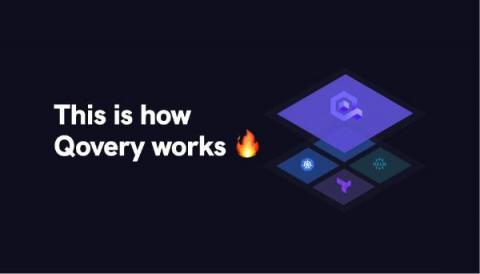
Transparency is essential when running production infrastructure. As we are onboarding more and more customers, we strive to make Qovery as open as possible and fully transparent on how it manages your applications. Check out our updated documentation to learn more on how Qovery works.
Kubernetes is the de facto container-management technology in the cloud world due to its scalability and reliability. It also provides a very flexible and developer-friendly API, which is the foundation of its control plane. The effectiveness of the Kubernetes API comes from how it manages the Kubernetes resources via metadata: labels and annotations. Metadata is essential for grouping resources, redirecting requests and managing deployments.