Ivanti Federal CTO, Bill Harrod, shares his take on the recent cybersecurity Executive Order issued by President Biden.
If you have been following the news or trying to buy gas in Atlanta, you probably have already heard about the ransomware attack on one of the most important strategic pipelines in the US. 2020 saw ransomware attacks skyrocket and now 2021 seems to be following the trend. The current situation begs us to rethink how we think about our security practices and mindset. One area of security that you may have heard about is Zero Trust (ZT).
Connection, empathy, and speedy responses are more important in the Customer Support world today than they ever have been before. I’m writing this while sitting in the same place I have worked from for the last year: in my dining room-turned-office, pads of sticky notes, and various charging cables keeping my cookbooks company on the shelf. Prior to March 2020, I commuted to an open office almost every weekday.
With the surge of endpoints and growing demands for access to data, public sector organizations have seen an increase in security threats since the onset of the pandemic. Against this backdrop, Elastic gathered industry leaders to learn how to manage these challenges and demands and build a path toward the future. The recent State and Local Government & Education ElasticON Public Sector event showcased the tech solutions that are delivering for constituents, faster.
Today I’m happy to share more about our partnership with Swimlane, which further reinforces our commitment to empowering security teams everywhere. Today’s security teams rely on the power of Elastic’s high-speed, cloud-scale analytics to solve their most complex and pressing security issues. Swimlane’s security automation platform provides a way for these same teams to accelerate and optimize their workflows for max efficiency and to solve SOAR use cases.
What are the crucial AWS Lambda metrics you should definitely be monitoring? Your application does not need to be “huge” for it to have enough functions and abstraction to get lost in it. As a DevOps engineer, you can’t cover every single factor. Showing relevant facts and asking the right questions is crucial! So when there’s a fire, you can troubleshoot in no time. Every organization is unique, and every workload has its own utility.
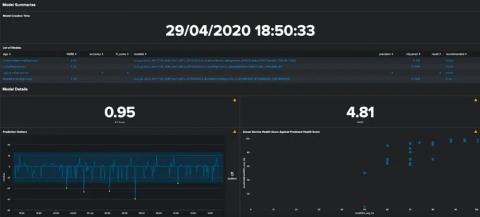
I’m sure many of you will have tried out the predictive features in ITSI, and you may even have a model or two running in production to predict potential outages before they occur. While we present a lot of useful metrics about the models’ performance at the time of training, how can you make sure that it is still generating accurate predictions? Inaccuracy in models as the underlying data or systems change over time is natural.
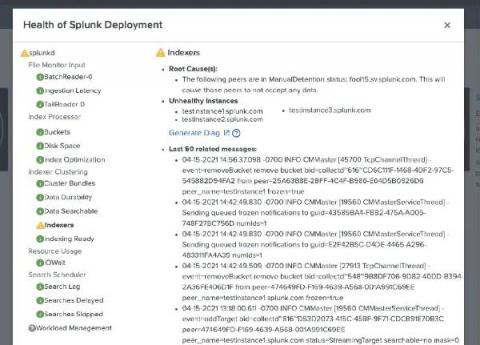
Welcome back to another day in paradise. Today we are announcing the release of Splunk Enterprise 8.2. Since our last release of Splunk Enterprise 8.1 at .conf20, we have continued development of new and enhanced capabilities for our twice a year release cadence. In Splunk Enterprise 8.2, we have focused our development offers across a number of themes: insights, admin productivity, data infrastructure, and performance.