Operations | Monitoring | ITSM | DevOps | Cloud

Monitoring High Cardinality Metrics

Monitoring is all about data. When you implement a monitoring tool, you have to make sure that the monitoring software can handle data. Today, data flows at high speeds and in large volumes. Data also comes in diverse forms, which increases the complexity of data ingestion. Because of this, monitoring solution providers promote, among others, their data processing capacities. If a monitoring platform can handle large and diverse data that comes in at a high velocity, it becomes a big advantage.
How to Handle Kubernetes Resource Quotas

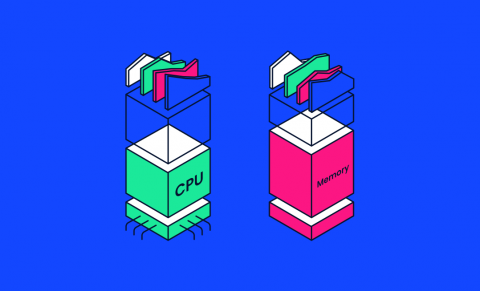
A containerized approach to software deployment means you can deploy at scale without having to worry about the configuration of each unit. In Kubernetes, clusters do the heavy lifting for you—they’re the pooled resources that run the pods that hold your individual containers. You can divide each cluster by namespace, which allows you to assign nodes (ie the machine resources in a cluster) to different roles or different teams. Resource quotas limit what each namespace can use.

Strengthening Aviation Cybersecurity: Take Flight with Teneo and Akamai Guardicore

In today’s digital landscape, the aviation industry faces increasingly sophisticated cyber threats that can compromise the safety and security of critical systems. To combat these challenges, the Transportation Security Administration (TSA) has implemented new cybersecurity requirements. In this blog post, we’ll explore how Teneo, in collaboration with Akamai Guardicore, can help aviation organizations meet these requirements and strengthen their cybersecurity defenses.

GitOps: An Introductory Guide

This post was written by Pete Osah, a software developer who is familiar with web technologies, passionate about new software technologies, and keen on developing ways to pass knowledge to others in a simple manner. Thanks to new technologies, developers can release software and features to production at a faster pace and with greater efficiency. But maintaining software dependability and integrity requires having the necessary tools in place.

Database Sharding: What is it, and How it Works?

Today’s world runs on data. We are constantly improving our solutions thanks to the plethora of data available to us in the public domain. Our society has seen a behavioral change when it comes to formulating remedies. We are increasingly adopting data-driven decisions, and rightly so. Now, talking about this whole data logic, where do you think this enormous amount of data gets stored? Well, the answer is a database!

Leveraging Calico flow logs for enhanced observability

In my previous blog post, I discussed how transitioning from legacy monolithic applications to microservices based applications running on Kubernetes brings a range of benefits, but that it also increases the application’s attack surface. I zoomed in on creating security policies to harden the distributed microservice application, but another key challenge this transition brings is observing and monitoring the workload communication and known and unknown security gaps.

What is Network Traffic Analysis?

How much network traffic is received by a business in the United States on average? More specifically, how many gigabytes do you think it is? The numbers may surprise you. According to Statista, the average traffic received was nearly 200 BILLION gigabytes (178.21 billion GB). And it is expected to grow to 224.08 in 2023. Another interesting statistic involving traffic, with numbers provided by Broadband Search, is that users in America generate 3.1 million GBs per minute every minute.

The Future of Logz.io: Simple, Cost-effective Observability

Asaf and I founded Logz.io in 2015 to provide developers with the ultimate open source log management experience. With our product, logging with the ELK Stack was simple, efficient, and automated for the first time – so customers could save engineering costs and accelerate MTTR.

Lightrun's Product Updates - Q2 2023

During the second quarter of this year, Lightrun persisted producing a wealth of developer productivity solutions and enhancements, aiming for greater troubleshooting of distributed workload applications, reduction of MTTR for complex issues, and cost optimization within cloud-computing. Read more below the main new features as well as the key product enhancements that were released in Q2 of 2023!

The Cost of Upgrading Hundreds of Kubernetes Clusters

At Qovery, we manage hundreds of Kubernetes clusters for our customers on different Cloud Providers. For most non-operational people, it’s hard to understand what it means behind the scene, the amount of work it represents, pitfalls we can encounter, and associated complexity. Our customers are coming for several reasons, but they’re all happy to have Qovery management on the Kubernetes maintenance and upgrade stack. On our side, it’s too many clusters to manage them manually.