Operations | Monitoring | ITSM | DevOps | Cloud

Data-Driven Defense: Exploring Global Cybersecurity and the Human Factor

A data-driven approach to cybersecurity provides the situational awareness to see what’s happening with our infrastructure, but this approach also requires people to interact with the data. That’s how we bring meaning to the data and make those decisions that, as yet, computers can’t make for us. In this post, Phil Gervasi unpacks what it means to have a data-driven approach to cybersecurity.
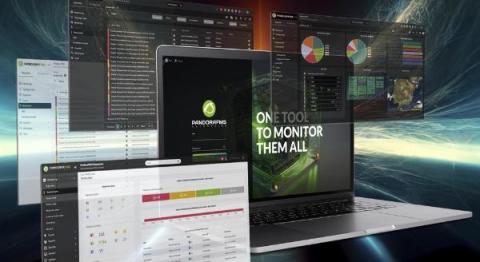

Pandora FMS transformation: Discover its new interface. Updated, homogeneous and developing

Pandora FMS has changed a lot since its inception, and you, dear reader, may have noticed it. Through effort and hard work it has grown older and become someone strong and capable. As you know, a tool, hard as well as flexible, that recognizes, connects and interprets different types of technologies to present them in a single environment. A system monitoring software that has gained lots of popularity in the market and has just launched its new interface.

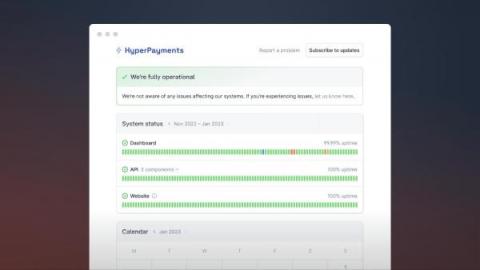
How we built it: incident.io Status Pages

We kicked off 2023 with a new team and a new product to build - Status Pages. We wanted to build a solution we could ship to customers as quickly as possible, while making sure that it’s reliable, fast and beautiful. Here’s how that process played out over the course of three months.

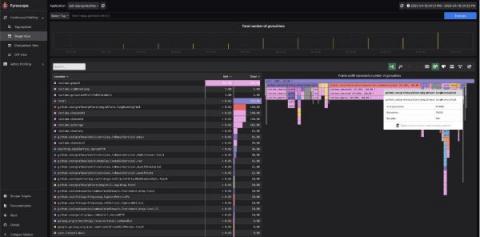
How to troubleshoot memory leaks in Go with Grafana Pyroscope

Memory leaks can be a significant issue in any programming language, and Go is no exception. Despite being a garbage-collected language, Go is still susceptible to memory leaks, which can lead to performance degradation and cause your operating system to run out of memory. To defend itself, the Linux operating system implements an Out-of-Memory (OOM) killer that identifies and terminates processes that consume too much memory and cause the system to become unresponsive.

Walking the Talk: How MDMs Help Recycling Businesses Stay True to Their Values

The call for digital transformation is largely directed toward for-profit companies: Digitizing their operations is presented as a means of increasing their efficiency, productivity, and ultimately, revenue. But organizations focused on social impact should care as much about digital enablement as their for-profit counterparts.

The TIG Stack in IIoT/OT

Many industrial operators find themselves amid yet another industrial revolution. Deeper insight through artificial intelligence (AI) and machine learning (ML) integrations characterize this fourth wave (or Industry 4.0). Data is no longer just a record occupying server space. It’s alive and providing value. Real-time insights work in tandem with historical records, painting a complete picture of the lifespan of a piece of machinery and/or its components.

What You Need to Know About IT Automation (and Common IT Tasks to Automate)

Picture this: your organization has grown exponentially in the past couple of years and the IT team is having a hard time keeping up the rapid growth. You were able to get hiring approved but there is still so much work that your team is having to work overtime just to stay afloat. Plus, now the CEO is hoping to free up some of your usual operational workload to focus on more strategic projects, leaving you wondering how you can manage all of these tasks with the bandwidth available.

Patch Management vs. Vulnerability Management

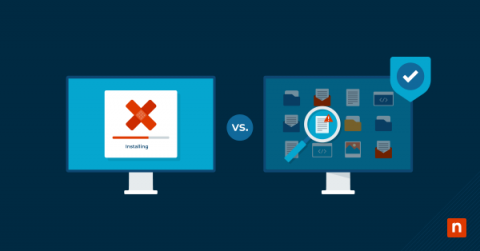
Although the terms “patch management” and “vulnerability management” are often used interchangeably, they are not the same process. Patch management and vulneradbility management are two processes that go hand-in-hand towards supporting a secure, efficient, and up-to-date IT infrastructure. Compare patch management vs. vulnerability management and see why both are essential for a secure IT environment.