Operations | Monitoring | ITSM | DevOps | Cloud

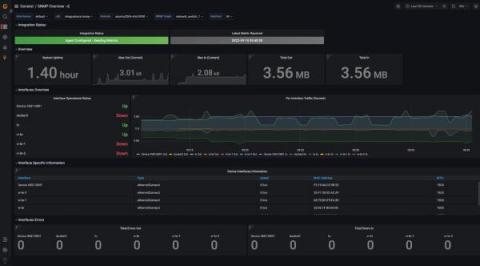
Set up instant SNMP monitoring with the new SNMP integration in Grafana Cloud

Simple Network Management Protocol (SNMP) is an internet protocol that is used to collect information about network devices and manage them. Most of the modern devices connected to a network support SNMP, such as routers, switches, servers, printers, and more. There are three different versions of SNMP (v1, v2, and v3). It most commonly operates on UDP ports 161 and 162. The most common versions being used are v1 and v2. The data can be collected from a network device through SNMP via polling.


How Puppet is making platform engineering more secure

As platform engineering continues to rise in popularity, there is a new side effect to watch out for: the people using the internal developer platforms aren't the people who built it. They’re not necessarily familiar with the codebase, they may not know what's powering it behind the scenes – and the platform might even have to contend with malicious users. So how is Puppet evolving to contend with this new challenge?

Introducing Squadcast Premium

For the last few years, Squadcast has been building out a market-leading on-call and alert management solution. Over the past few quarters, we have significantly enhanced our on-call product by releasing and improving features related to Incident Response - including Slack / MS Teams integration, Runbooks, Postmortems, Service Level Objectives, and Status Pages. We believe that a reliability platform involves both on-call and incident response - one cannot work effectively without the other.

Tips for National Cybersecurity Awareness Month You May Be Overlooking

Did you know Halloween isn’t the only event in October ready to send shivers down your spine? Each year, October is “National Cybersecurity Awareness Month” in the U.S. and “European Cybersecurity Month” in Europe. So, before we dress up as ghosts, vampires, or whatever, let’s have a quick look at some old and new cyber risks to be aware of and how to deal with them.

NIST Cybersecurity Framework: Core Functions, Implementation Tiers, and Profiles

You can take a wide range of actions to nurture a culture of cybersecurity in your organization. Some of them can be directed to your employees - and include initiatives like password management and phishing training - and others are related to strategy to adopt towards cybersecurity risk. That's where the NIST cybersecurity framework comes in (as well as other best practices such as CIS controls).

10 Tools for Monitoring Mobile Apps from a Network Point of View

With so many apps to choose from, mobile users no longer have much patience for apps that don’t work well. This isn’t just about bugs and crashes; users also think about how fast the app works and how much battery it uses. But have you ever thought about what would happen to the business if your live applications running on the client’s systems went down or didn’t work as expected?

Cloud Monitoring further embraces open source by adding PromQL

As Kubernetes monitoring continues to standardize on Prometheus as a form factor, more and more developers are becoming familiar with Prometheus’ built-in query language, PromQL. Besides being bundled with Prometheus, PromQL is popular for being a simple yet expressive language for querying time series data. It’s been fully adopted by the community, with lots of great query repositories, sample playbooks, and trainings for PromQL available online.

There's a better way: how an incident management tool helps you conquer response challenges

As a solutions engineer for FireHydrant, I speak with a wide variety of companies about their incident management programs — from start-ups with a handful of employees to large enterprise companies with thousands of engineers. Whether they’re looking to establish their incident management program or mature it, the same questions remain.

We have redesigned our entire service

As of today, Oh Dear is in a brand new jacket. We've totally redesigned Oh Dear's UI. Our app doesn't only look better, but we've also made it much easier to use. We feel that our new design should speak for itself, so we highly recommend visiting the home page, browsing a bit around, register an account, or log in, and discover the redesigned app yourself. If you've been using Oh Dear before, you'll notice that we polished everything, and the UX should be much better.

Data Pipelines: How Data Pipelines Work & How To Get Started

Every millisecond, humans generate significant volumes of data, from various IoT devices such as our wearable devices to daily activities such as internet surfing and tracking our workouts. Data continues to accumulate. Statista estimates that by 2025, the amount of data will have increased to 180 zettabytes. That's far too much information.