Operations | Monitoring | ITSM | DevOps | Cloud

Log Observability and Analytics Guide

Monitoring and analyzing log files to identify and resolve issues make up log observability. Log analytics is the process of extracting insights from log data. Logs are a valuable source of information for IT operations teams, as they provide insight into what is happening on a system or network. Logs can monitor system performance, troubleshoot problems, and identify security incidents. Logs are a vital part of application performance management.

IP Blacklisting: Your Beginner's Guide

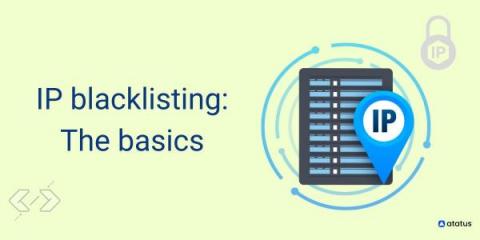
IP Blacklists contain ranges of or individual IP addresses ‌you want to block. A blacklist can be used in combination with firewalls, intrusion prevention systems (IPS), and other traffic filtering tools. With the recent developments in cyber security, organizations are increasingly relying on IP blacklisting to protect their networks.

Node.js Performance Testing and Tuning: Step by Step Approach

Node.js is well-known for its lightning-fast performance. However, as with any programming language, you might develop Node.js code that performs poorly for your users. Appropriate performance testing is required to combat this. Node.js can be used for a variety of tasks, including scripting to do tasks, running a web server, and serving static files, such as a website. Today, we'll go over the procedures to test a Node.js HTTP web API.

Beginner's Guide to RabbitMQ Logging: How to View, Locate, and Analyze Logs

RabbitMQ is one of the most popular open-source message brokers available. Its ability to be deployed in various configurations and on various platforms makes it a widely used tool; it also supports all major messaging protocols, making it very versatile. Still, debugging issues with a tool like RabbitMQ can be challenging, especially when it’s deployed on a large cluster. RabbitMQ logs are one way to go, as they help you backtrack to an earlier point while debugging.

Cloud storage provider Koofr loves Icinga´s flexibility and simple handling

We´re proud of our many customers and users around the globe that trust Icinga for critical IT infrastructure monitoring. That´s why we´re now showcasing some of these enterprises with their Success stories. It´s stories from companies or organizations just like yours, of any size and different kinds of industries. Some of them are our long-standing customers, others have just recently profited from migrating from another solution to Icinga.

How to Monitor IT Infrastructure when adopting IaC for VDI and Digital Workspaces

IaC (Infrastructure-as-Code) is becoming ubiquitous in the EUC (End User Computing) community and within the datacenter. Automation and declarative infrastructure for on-premises VDI and cloud digital workspaces, such as Microsoft AVD (Azure Virtual Desktop) or AWS WorkSpaces, is now mainstream. Vendors such as Citrix now advocate the use of technologies such as Terraform and Ansible for deployments.

Nameserver Explained: What it is And How it Works

The Internet is a vast network of servers and devices connecting people worldwide. It allows for near-instant data communication between machines, which is presented in a readable format for the end-user. From a human perspective, it's a simple case of typing the URL of your desired website and pressing enter. Of course, computers talk to one another in their own numerical language, using lengthy IP addresses to refer to domains instead of URLs.

3 ways to improve your incident management posture today

Too many of us are still playing whack-a-mole when it comes to incidents: an incident is declared, the on-call engineer is paged, the incident is resolved and then forgotten — until next time. It’s time to start thinking in terms of proactive incident management, not just reactive incident response.

An enterprises' guide to getting started with ITAM for modern innovation

From the point of view of your business, resources and tools that are underutilized are a liability. They can severely affect the bottom line of your enterprise. These tools can cost more than their value, present security risks, and hamper productivity within your enterprise. Even if a particular tool was helpful during the growth of your enterprise, it could soon become obsolete.

What Does Observability Mean for Developers?

Monitoring is often not the first thing on the mind of the modern developer. Yet, it’s necessary at many points of the software development lifecycle, including: before deprecating an API, before launching a new feature, after launching the feature, and more. In fact, monitoring needs can vary much more than the classic Ops monitoring. My podcast guest Liran Haimovitch is the co-founder and CTO of Rookout, a live data collection and debugging platform.