
AIOps and Digital Transformation Predictions for 2022
Chestnuts roasting on an open fire. Jack Frost turning noses blue. Yuletide carols being sung by a choir, and folks predicting twenty twenty-two.

Managed service providers (MSPs) proactively deliver on-premises services to client organizations and manage their IT networks. To achieve this, they rely on numerous customized tools designed specifically to manage the complete IT infrastructures of all their clients. MSPs most often rely on remote monitoring and management (RMM) tools to provide services to customers, meet their SLAs on time, and have a good ROI.
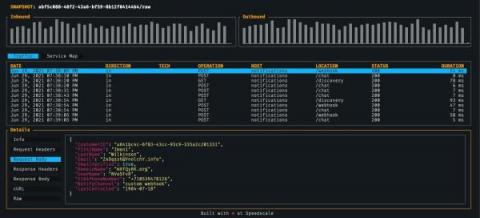
We are excited to announce the launch of Speedscale CLI, a free observability tool that inspects, detects and maps API calls on local applications or containers. The offering underscores the importance of continued and proactive API testing to quickly detect and debug defects within a shifting array of upstream and downstream interdependencies.
You’ve probably heard before that the best thing to do with your extra money is to invest. And the stock market was built so that any average person could do just that. In fact, the New York Stock Exchange was originally just a group of merchants who met in person daily to buy and sell stocks and bonds. Over time, however, regulations were put in place that limited the type of people allowed to take part in the financial markets.
In the first of this two-part series, we covered how to set up AppSignal in a Ruby on Rails application for many great insights out of the box. AppSignal can automatically track errors, monitor performance, and report metrics about some dependencies. But, in many cases, each of our applications behaves in different ways, so we'll want more than just generic monitoring. In this post, we will run through adding custom instrumentation and monitoring to a Ruby on Rails application.
Monitoring is a critical part of managing a WordPress site since you need to know what's going on with it, such as how many visitors it has, how quickly it loads, and whether it's constantly online. Data on these areas will aid you in making critical decisions, resulting in improved performance, happier visitors, and, if applicable, a higher bottom line. Many factors can cause WordPress to slow down, but you don't need to be a techie to address them.
Today’s organizations are managing increasingly complex IT ecosystems and pressured to deliver on innovation—all while trying to maintain service performance and reliability to keep up with the always-on digital economy. With IT complexity growing exponentially, incidents have become a common, if not day-to-day struggle for many businesses. Incident management is the process or method that modern organizations use to prepare for and respond to service disruptions.
According to the U.S. Bureau of Labor Statistics, employers are losing more than four million workers every single month. That, coupled with the record number of 11 million open jobs, has left businesses across the board scrambling to crack the code and find a way to not only attract top talent – but, more importantly – keep them from jumping ship at the next best opportunity.