CFEngine 2021 Retrospective
For our final blog post of 2021 and continuing our tradition, we’d like to reflect on all the CFEngine accomplishments throughout the year and provide a sneak peak of what to expect in 2022.


For our final blog post of 2021 and continuing our tradition, we’d like to reflect on all the CFEngine accomplishments throughout the year and provide a sneak peak of what to expect in 2022.
For the newest instalment in our series of interviews asking leading technology specialists about their achievements in their field, we’ve welcomed Mark Perry - Head of Global Business Development at Cloudpick.
2021 turned out to be a tale of two stories – on the one hand we saw cloud investments and adoption on the rise, and on the other we observed uncertainties from leaders tasked with bringing about these transformations. Nonetheless, there is little doubt that 2021 was a hot year for the cloud.
Compute functions that run on Amazon’s Elastic Container Service (ECS) require regular monitoring to ensure proper running and managing of containerized functions on AWS – in short, ECS monitoring is a must. ECS can manage containers with either EC2 or Fargate compute functions. While EC2 and Fargate are compute services, EC2 allows users to configure virtually every functional aspect. Fargate is more limited in its available settings but is simpler to set up.
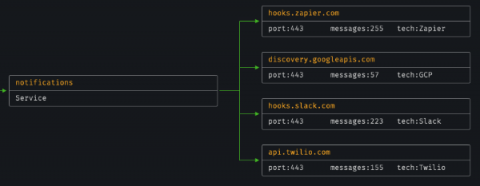
In this blog post we’ll help answer the age old question, “What does this service talk to and what does it say?” We’ll see how to inspect inbound and outbound REST API calls to see what calls are being made and what incoming traffic causes a reaction. This can be pretty handy when you’re taking over maintenance of an existing service, or if your code just isn’t behaving the way you expect.
Grafana Tempo has had quite a year. Just eight months after it was announced at ObservabilityCON 2020, the open source tracing solution went GA. Since the Tempo team released v1.0 in June, we have ingested more than 39 trillion spans, a 26x increase from last year. We also introduced Grafana Enterprise Traces, which is powered by Tempo, to the Grafana Enterprise Stack.
Every day the world is changing in terms of technology. A new innovation happens every second, and software and websites are becoming more and more advanced. We can now access almost every service on the internet, and software needs to be maintained as a top priority so that customer service will not get hindered. Software monitoring, however, is not an easy task. It is a 24x7 business because any user can face an issue at any time.
You have probably heard of Log4Shell, the security vulnerability that has ‘earned’ itself an NIST rank of 10: In this post I will show a really basic example of how this vulnerability actually works. I will walk you through some basic usage of the Log4J library and then show how some fairly basic inputs into this library can cause truly unexpected, and potentially disastrous, outcomes.