Operations | Monitoring | ITSM | DevOps | Cloud

What Is Cloud Management? The Ultimate Guide

According to AWS, “Creating a software system is a lot like constructing a building. If the foundation is not solid, structural problems can undermine the integrity and function of the building.” This is especially true when it comes to the cloud. If an organization doesn’t effectively oversee key areas of its foundation, it’s likely the result is not going to be successful. When it comes to cloud management, we look at it through the lens of the AWS Well-Architected Framework.
New Google Cloud instance types on Elastic Cloud

We are excited to announce support for Google Compute Engine (GCE) N2 general purpose virtual machine (VM) types, and additional hardware configuration options powered by N2 custom machine types. N2 VMs leverage Intel 2nd Generation Xeon Scalable processors and provide a balance of compute, memory, and storage. N2 machine types also offer more than a 20% improvement in price-performance over the first-generation N1 machines.

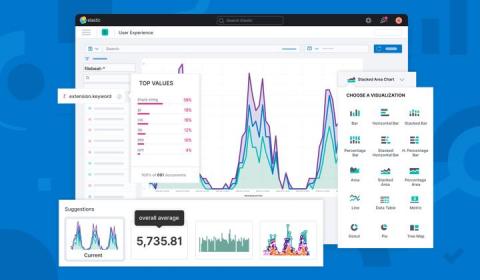
10 common questions answered with formulas and time travel in Kibana

Kibana creates easy ways to do powerful things with all of your data — to ask and answer questions and follow the flow of analysis. Many times the answer to your question requires calculations based on queried data. Formulas allow you to author your own metrics by combining multiple aggregated fields using math operations. In addition, moving through and replaying your data in time and space are powerful ways to gain historical context and understand additional insight about the present.

Managed Service Provider - How AlertOps Helps MSP Scale Digital Transformation Initiatives.

In an era where speed, productivity, and user experiences matter most what are the incident management capabilities managed service provider need most to grow, transform and mature their digital operations, processes and serve more organizations, faster and more efficiently. Many of today’s enterprises still have operations that are largely manual, reactive and lack the in-house resources and expertise to undertake a digital transformation initiative.

What's New: Introducing Delay Notifications to Control Alert Fatigue

The OnPage team is pleased to announce a new feature to the enterprise web console: Delay Notifications. With this new addition, organizations have the option to queue messages for specific time periods, delivering messages at the end of the Delay Notification schedule. The latest feature is designed to alleviate alert fatigue and improve work-life balance for incident respondents.

How to Test JavaScript Lambda Functions?

Function as a service (FaaS) offerings like AWS Lambda are a blessing for software development. They remove many of the issues that come with the setup and maintenance of backend infrastructure. With much of the upfront work taken out of the process, they also lower the barrier to start a new service and encourage modularization and encapsulation of software systems. Testing distributed systems and serverless cloud infrastructures.

Logit.io named as a Performer in log management & data analytics award

We are excited to announce that Logit.io has recently taken home three awards from Appvizer’s selection ranking the best log management and data analytics tools on their platform. In addition to this, we’ve also been named as one of their certified partners for 2021.

AWS Compute Optimizer: Pros and Cons

AWS offers a Compute Optimizer tool that uses machine learning to analyze your historical utilization metrics and then recommend optimal AWS resources to help you reduce costs and improve performance. And it is free, you just need to opt in to the service in the AWS Compute Optimizer Console. Sounds great, right? Well, yes and no. It is a useful little tool, but if you do not understand its pros and cons, you will not be as optimized as you may think. Here is a breakdown.

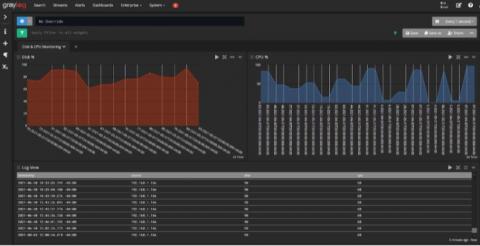
Supercharge Storage Optimization Via Graylog

Just how smart is your storage management? Storage is one of the most promising ways to shift from the "more is better" philosophy to the "work smarter" philosophy. What do I mean by that? Historically, IT managers who needed more storage responded in the most obvious way: they bought more. Then they deployed it, integrated it, and waited until the problem recurred.