Operations | Monitoring | ITSM | DevOps | Cloud

Google Authd broker: authenticate to Ubuntu Desktop/Server with your Google account

Today we are announcing the introduction of Authd support for Google IAM, allowing all Ubuntu users to use their Google account to authenticate to their desktop and servers. The Google broker snap for Authd is available for free on Ubuntu Desktop and Server 24.04 and it works with both personal and Workspace Google accounts.

Enhancing SAP Monitoring and Incident Management with IT-Conductor and ilert

We are excited to announce the integration of ilert with IT-Conductor, a SaaS-based IT operations management and automation platform. This partnership enhances IT-Conductor’s powerful capabilities with ilert’s advanced alerting and incident management, ensuring that IT teams can address issues faster and more efficiently.

InfoBlox NetMRI is Ending-Here's Why You Should Move to IP Fabric Now

If you are a network owner, you know the importance of stability, visibility, and automation. With NetMRI reaching its Last Order Date on April 30, 2025, now is the time to think ahead and choose a solution that doesn’t just replace what you have—but actually makes your job easier. That’s where IP Fabric comes in. If you’re still relying on NetMRI for network configuration and change management (NCCM), I strongly recommend making the switch now. Here’s why.

Nginx Logging: A Complete Guide for Beginners

So, you're wrestling with Nginx logs, huh? Been there. In fact, I used to spend way too much time hunting down log files until I finally got smart about it. Let me save you the trouble. Nginx logs are like the black box flight recorder for your web server. When everything crashes and burns (and it will), those logs are often the only evidence left to figure out what happened. But first, you need to know where to find them.

Prometheus API: From Basics to Advanced Usage

Monitoring your infrastructure shouldn’t be a shot in the dark. The Prometheus API helps you pull the right metrics so you actually know what’s going on. Whether you’re just getting started or trying to make sense of your current setup, this guide breaks down how to use the API to get the answers you need—without the guesswork.

Is Your Incident Management Tool a Single Point of Failure? The Case for a Multi-Channel Approach

When we’re talking about incidents, we know it’s not a matter of if, but when. It spares no systems: ours, yours or your vendors’. We’ve all seen widely-used products experience incidents, and the domino effect it has on all operations relying on them for seamless functionality. Vendors offering narrow, chat-centered incident management tools might seem attractive at first glance, but they fundamentally misunderstand the complexity of enterprise operations.

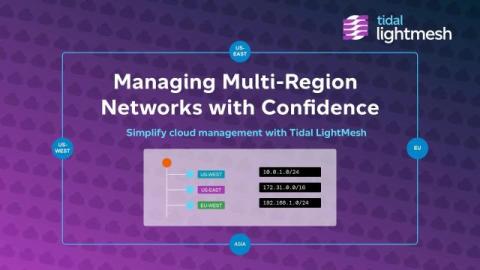
Managing Multi-Region Networks with Confidence

Managing cloud networks today is like navigating a city without street signs—unpredictable and chaotic. As enterprises expand their cloud presence, they face a surge in IP addresses across regions, leaving traditional methods like spreadsheets and fragmented tools unable to keep up. Modern cloud infrastructure demands smarter, more scalable network management to tackle challenges such as IP sprawl, inconsistent configurations, and lack of visibility.

Drift Detection in Kubernetes

When the increasingly popular strategy of configuration as code (CaC) is used to develop infrastructure, it’s known as infrastructure as code (IaC). Today, IaC is quickly becoming entrenched in development processes, especially in conjunction with Terraform and Kubernetes. Yet, although IaC (and CaC) bring immense value, they can also lead to a major problem: configuration drift.

How to Monitor Distributed Networks: The Essential Guide

Traditional centralized networks are a thing of the past—distributed networks have taken over. Why? Because they’re built to handle today’s cloud-based services and SaaS apps way more effectively. In a world where businesses operate across the globe and data moves in real time, distributed networks have become the foundation of modern IT.