Operations | Monitoring | ITSM | DevOps | Cloud

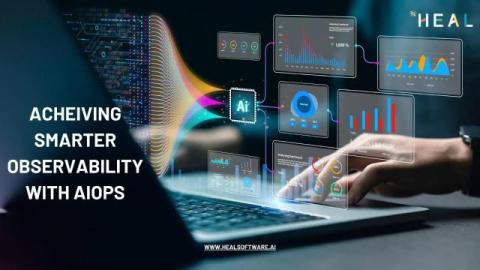
Observability to AIOps: Transforming Anomaly Detection for Modern Enterprises

As businesses increasingly digitize operations, IT systems are evolving into complex, distributed ecosystems. Applications run across multi-cloud environments, microservices power critical processes, and data flows in real time across countless touchpoints. While this transformation drives agility and scalability, it introduces significant challenges: hidden anomalies that can disrupt operations, frustrate users, and damage revenue.

New improvement: Component filter tags for easier filtering

One of StatusGator’s most important cloud service monitoring features is component filtering. Many services have multiple components such as regions, products, or features and not every component may be relevant to you. Our new component filter tags help you quickly identify how many components of a service you’re currently monitoring. This makes it easier to ensure your notifications are focused on what matters most.

Time-Saving Tips for Using Puppet: Build, Run & Manage Your Infrastructure

We’re always rolling out new ways to make Puppet easier to use and maintain so you can run better infrastructure, ditch toil, save time, and increase ROI — fast. This guide will help you with a few need-to-know time saving tricks that can make starting with Puppet, or continuing to manage Puppet, easier and speedier.

The evolving role of SREs: Balancing reliability, cost, and innovation

A look at the expanding roles of SREs and the new skills needed: cost management and AI Imagine the CTO walks into your team meeting and drops a bombshell: "We need to cut our cloud costs by 30% this quarter." As the lead SRE, this might cause a strong reaction — isn’t your job about ensuring reliability? When did you become responsible for the company's cloud bill? If you've had a similar experience, you're not alone. The role of site reliability engineers (SREs) is evolving fast.

Critical Context: Adding Trace Quickview to Logz.io's Explore

Complexity rules the day within the world of data systems and pipelines. A goal for any observability practice is to help reduce complexity and give users and administrators a clear view of what’s happening in any system. This is the path to unified observability, a mature system where monitoring and troubleshooting are streamlined. This has been difficult to achieve for many organizations.

Distributed WordPress on Cycle and GCP

Recently I've had the great privilege of working on creating a distributed WordPress deployment that leverages GCP compute and services alongside containers running on the Cycle platform. This blog dives into a bit of the history of why WordPress is difficult to deploy in a distributed way, how we approached it, some really interesting things we found, and finally, the solution we put in place.

AWS EKS Auto Mode with Qovery - Valuable Or Not?

At Qovery, we are closely following the development of EKS Auto Mode, a new feature from AWS designed to simplify Kubernetes management by automating various foundational components. While we recognize the effort AWS has put into this, our initial evaluation shows that EKS Auto Mode is still in its early stages and does not yet offer sufficient value to be a strong consideration for our users.

Guide to Cloud Migration: From PaaS to IaaS

For scaling businesses, transitioning from PaaS (Platform as a Service) to IaaS (Infrastructure as a Service) is less about a choice and more about necessity. Staying on PaaS too long can result in skyrocketing costs, limited flexibility, and performance bottlenecks — challenges that only grow as your workloads and team scale.

How Autonomic IT Helps Enterprises Meet the Demands of a Digital and Dynamic Business Landscape

Autonomic IT is the pinnacle of IT evolution. Inspired by the human autonomic nervous system, it refers to self-managing IT systems that autonomously monitor, optimize, and resolve issues. By integrating data, advanced AI and machine learning (ML), and automation, Autonomic IT enterprises can predict, prevent, and resolve IT issues more proactively, enhancing efficiency and reliability. However, Autonomic IT is more than just a framework for machines to fix themselves.

Best practices for monitoring event-driven architectures

Microservices architectures empower individual teams to choose their own programming language, tools, and technologies, resulting in more independence and the ability to develop and release features faster. While there are various types of integration patterns that can facilitate microservice communication, many organizations choose to adopt event-driven architectures (EDAs) because of their scalability, agility, and resilience.