Operations | Monitoring | ITSM | DevOps | Cloud

Predictive vs. Prescriptive Analytics: What's The Difference?

Imagine being able to foresee future trends, anticipate customer behaviour, optimize your operations, and take actions that are not just reactive — they shape the future of the market. In the world of data-driven decision-making, we're able to do all that by paying attention to the information we analyze from predictive and prescriptive analytics. A large and growing field, data analytics is often broken into four categories — of which predictive and prescriptive are two!

Why Does Observability Need OTel?

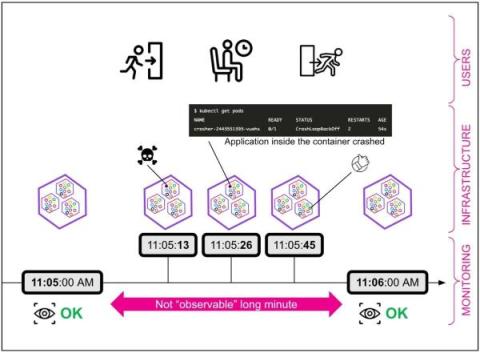
To successfully observe modern digital platforms, a new data collection approach was needed. And OpenTelemetry (OTel) was the answer - an industry-agreed open standard - not a single vendor's approach - on how observability (O11y) data should be collected from a platform. This separates out data collection from the vendors’ platform of data processing and visualisation, making the data collecting approach vendor agnostic.

Double Down on Your Backups

In August, a ransomware attack hit another company. Unfortunately, it hit a regional cloud provider in Europe this time, and we can call this a “critical hit.” So far, we know a virtual server got compromised and used as a jump host; from there, the attacker started to encrypt all volumes in the same domain. Based on pure luck or some profound reconnaissance, the same server migrated into a different data center and continued its unplanned job from there.

Digital transformation trends in oil and gas

The Oil and Gas sector, responsible in part for two industrial revolutions in the last 300 years, has been something of a laggard when it comes to adoption of new technologies. Cloud and edge penetration in Oil and Gas is late compared to other industries, mainly due to long standing concerns around security and data privacy.

Query 3rd Party API Datasets in Real Time with Cribl Search

In today’s world of relentless data growth, security-relevant logs represent a small snapshot of an organization’s overall environment. Teams are beset with a variety of data types, including performance metrics and traces, asset configuration and state, audit logs, and much more. On top of that, teams are expected to scan all of this to compare against industry best practices and join this data with logs and metrics for added context.

How to deploy a Hello World web app with Elastic Observability on AWS App Runner

Elastic Observability is the premiere tool to provide visibility into web apps running in your environment. AWS App Runner is the serverless platform of choice to run your web apps that need to scale up and down massively to meet demand or minimize costs. Elastic Observability combined with AWS App Runner is the perfect solution for developers to deploy web apps that are auto-scaled with fully observable operations, in a way that’s straightforward to implement and manage.

The new principles of incident alerting: it's time to evolve

In the ever-evolving world of software engineering, the landscape is constantly shifting. New technologies emerge, best practices evolve, and how we build and run software continues to change. However, when it comes to incident alerting, it often feels like we're stuck in the past.

Top DevOps Experts offer Key Insights at swampUP

With five keynotes and 15 breakout sessions in one day, there was no shortage of important industry knowledge and key insights from this year’s JFrog swampUP DevOps and DevSecOps user conference. Presenters discussed the role of DevOps at Netflix, how Fidelity migrated to the Cloud, the trend of shifting further left than left, and more. In this post we highlight the three presentations below that challenged attendees to rethink the status quo and reassess their own DevOps and security practices.

The Ins And Outs of Software Compliance

Software compliance protects your organization from legal, regulatory, and reputational damage. Done well, it stands as a fundamental pillar of your IT Asset Management (ITAM), by helping you keep track of your software assets and manage licenses effectively. Here, we will explore what this practice entails and how it can benefit your business both from an administrative and a financial perspective.