AI is booming. The AI market is projected to grow 37.3% annually from 2023 to 2030. With so many organizations adopting or considering AI applications, data centers need to be ready to support the new demand. However, without the right tools and data, it is difficult to understand if your existing facilities have the capacity to support systems like the “gold standard for AI infrastructure,” the NVIDIA DGX H100.
In this tutorial, we will learn about configuring Filebeat to run as a DaemonSet in our Kubernetes cluster in order to ship logs to the Elasticsearch backend. We are using Filebeat instead of FluentD or FluentBit because it is an extremely lightweight utility and has a first-class support for Kubernetes. It is best for production-level setups. This blog post is the second in a two-part series. The first post runs through the deployment architecture for the nodes and deploying Kibana and ES-HQ.
This is the first post of a 2 part series where we will set up production-grade Kubernetes logging for applications deployed in the cluster and the cluster itself. We will be using Elasticsearch as the logging backend for this. The Elasticsearch setup will be extremely scalable and fault-tolerant.
A Key Management Service (KMS) is used to create and manage cryptographic keys and control their usage across various platforms and applications. If you are an AWS user, you must have heard of or used its managed Key Management Service called AWS KMS. This service allows users to manage keys across AWS services and hosted applications in a secure way.
A stack trace lacking your source code with all the variables and function names, is like putting together a jigsaw puzzle without a picture for reference. You have all these randomly shaped pieces but no way to know how they fit together. Unless you are fluent in computer, making sense of a JavaScript stack trace with minified code is going to make debugging very difficult. Thankfully, by uploading source maps to Sentry, you can map back to the original source code to make sense of what went wrong.
In a previous post, we talked about synonyms and their importance for providing a great search experience. Using synonyms improves search results by: Search results need to evolve over time. New items go on sale, new trends change what users search for, and new terms become part of a search domain. Our search experience must evolve as well. As part of evolving our search experience, it's important to keep our synonyms updated.
OpenTelemetry (OTel) is steadily gaining broad industry adoption. As one of the major Cloud Native Computing Foundation (CNCF) projects, with as many commits as Kubernetes, it is gaining support from major ISVs and cloud providers delivering support for the framework. Many global companies from finance, insurance, tech, and other industries are starting to standardize on OpenTelemetry.
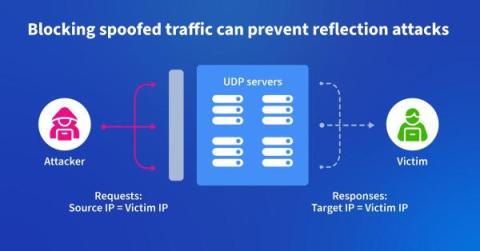
In this blog post, we describe how one backbone service provider uses Kentik to identify and root out spoofed traffic used to launch DDoS attacks. It’s a “moral responsibility,” says their chief architect.