Operations | Monitoring | ITSM | DevOps | Cloud

The Leading Use Cases For Data Monitoring

Generally, data monitoring can be referred to as a continuous process of observing and tracking data in order to ensure its integrity, quality, and conformance with specific standards or requirements. Data monitoring often involves systematic data collection, analysis, and reporting to identify patterns, trends, anomalies, and potential issues.

Adopt a "Release-first" Approach with Release Lifecycle Management in JFrog Artifactory

Every organization has a process for building and releasing software. Smaller organizations may run a few automated tests before releasing, while larger organizations may have 100s of scans, validations, and approvals spanning everything from technical to legal. Whatever the process is, the end goal is the same: software that’s mature enough for release. The challenge is that this process is complicated, messy, and often created in an ad hoc way, changing as organizations evolve.

How Coralogix Powers Your Synthetic Monitoring with Checkly

As a leading full-stack observability platform, Coralogix enables you to gather, monitor and analyze your infrastructure and application telemetry. And Coralogix now offers synthetic monitoring for proactive end-to-end testing across development with Checkly.

How to get the best of lexical and AI-powered search with Elastic's vector database

Maybe you came across the term “vector database” and are wondering whether it’s the new kid on the block of data retrieval systems. Maybe you are confused by conflicting claims about vector databases. The truth is, the approach used by vector databases has been around for a few years.

Understanding VMware: A Comprehensive Guide

VMware, Inc., a subsidiary of Dell Technologies, is a leading provider of cloud computing and virtualization software and services. Since its establishment in 1998, VMware has been at the forefront of the IT industry, revolutionizing the way businesses operate with its innovative virtualization technology. This article aims to provide an in-depth understanding of VMware, its suite of products, and its transformative impact on the business landscape.

What is Hyper-V?

Hyper-V is a native hypervisor from Microsoft that allows users to create and manage virtual machines (VMs). It’s an integral part of Windows Server and provides a virtualized environment for running multiple operating systems on a single physical machine. This technology has revolutionized the way businesses operate by enabling them to maximize hardware usage, reduce costs, and improve disaster recovery processes.

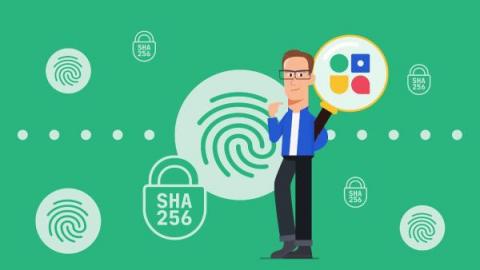
From Monitoring to Action - Get Faster Incident Response with Change Forensics

In this post you’ll learn how Kosli’s Change Forensics gives DevOps, Platform, and Site Reliability Engineers the ability to rapidly pinpoint and understand changes and events in their infrastructure and applications, and get to the cause(s) of an incident quickly.

Meet Elemental: Cloud Native OS Management in Kubernetes

Wouldn’t it be great if Rancher could provision and manage not only Kubernetes clusters but also the OS running on the cluster nodes? This is the goal we had in mind when we started working on Elemental. Elemental adds to Rancher the ability to install and manage a minimal OS based on SUSE Linux Enterprise technology, delivered and managed in a fully cloud native way. This simplifies the infrastructure (you only need a container registry) and day 2 operations.

Tips on making on-call manageable

On-call responsibilities are a crucial part of many industries, ensuring that businesses can provide round-the-clock support to their customers. However, the demanding nature of on-call duty can lead to burnout and reduced productivity if not managed effectively. In this article, we will explore various strategies and tips to make on-call more manageable, enabling professionals to maintain a healthy work-life balance and deliver exceptional service.