Fidelity National Information Services, Inc. (FIS) is an American multinational corporation which offers a wide range of financial products and services. FIS is most known for its development of Financial Technology, or FinTech. FIS has a portfolio of products for the financial services sector, including both retail and investment banking. FIS global customers connect to services from FIS’s Little Rock, AR datacenter.
Managing over 1000 services and applications is daunting for any organization’s IT and Tech operations team. With a diverse mix of on-premises legacy systems and modern cloud stacks, the sheer volume of activity can overwhelm even the most skilled ITOps teams. The task is made more difficult by the fact that observability is fragmented. On average, organizations depend on 21 systems that produce metrics, logs, traces, and alerts for various services.
Arguably, OpenTelemetry exists to (greatly) increase usage of tracing and metrics among developers. That said, logging will continue to play a critical role in providing flexible, application-specific, event-driven data. Further, OpenTelemetry has the potential to bring added value to existing application logging flows.
Elasticsearch® has been used by developers to build search experiences for over a decade. At Microsoft Build this year, we announced the launch of Elasticsearch Relevance Engine™ — a set of tools to enable developers to build AI-powered search applications. With generative AI, large language models (LLMs), and vector search capabilities gaining mindshare, we are delighted to expand our range of tools and enable our customers in building the next generation of search apps.
Logz.io is honored to have our Cloud SIEM as one of the products available as part of the launch of AWS AppFabric. For customers invested in AWS, this inclusion allows you to use our cloud-based, agile SIEM seamlessly alongside other critical SaaS applications.
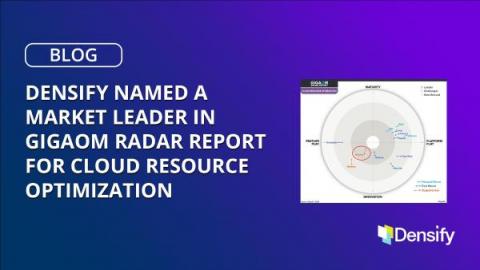
June 27, 2023 We were excited to learn last week that GigaOm named Densify as both a Leader and an “Outperformer” in its new report “Radar for Cloud Resource Optimization”. This was particularly meaningful to us for a few reasons.