Docker containers have taken the software industry by storm. Ever since its launch in 2013, Docker’s usage and popularity have grown at a rapid pace. Docker has saved organizations from the challenges of managing dependency and version conflicts across multiple environments by providing a portable, secure, and (most importantly) reliable container technology for shipping applications.
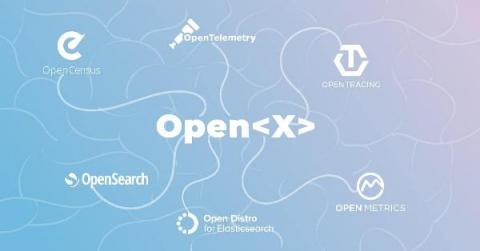
Do you also find yourself confused by all the Open-this and Open-that names flying around? There are currently a good few Open projects, standards, tools – OpenTelemetry, OpenTracing, OpenCensus, OpenSearch… heck, even my podcast is called OpenObservability! And new Open names seem to be popping up every other day. If you too feel this way, there’s no need. Many feel similarly confused.
Elastic made their latest minor Elasticsearch release on May 25, 2021. Elasticsearch Version 7.13 contains the rollout of several features that were only in preview in earlier versions. There are also enhancements to existing features, critical bug fixes, and some breaking changes of note. Three more patches have been released on the minor version, and more are expected before releasing the next minor version.
Minimizing and automating the path from development and production is necessary in order to stay competitive and keep customers happy. As engineering teams strive to solve this by quickly and efficiently rolling out new features, updates, and bug fixes, continuous integration and deployment (CI/CD) has come to be regarded as an industry best practice. One of the most popular CI/CD solutions is Jenkins, an open-source job execution system.
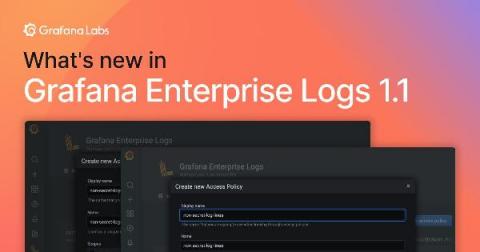
Back in February, we introduced Grafana Enterprise Logs (GEL) into the Grafana Enterprise Stack. GEL is a new way for large organizations to ingest and query their full log volume, without the cost or operational complexity associated with other solutions. (View a demo here.) We just released GEL 1.1, and one of its key features is label-based access control (LBAC).
Once a year we let our imagination go wild for a whole week during our annual Hackweek event. It’s where we come up with product updates, like dark mode support, design them and implement prototypes. The mobile engineering team came up with the idea for a Sentry mobile app that focuses on Release Health. We wanted to give developers a concise but comprehensive view of if a release was healthy, errored, or experiencing abnormal crash sessions across multiple projects.
No matter what you’re using Kubernetes for, visibility into your applications’ performance and activity is a beneficial and often essential undertaking – essential, but colossal, requiring entire teams dedicated to nothing but maintaining deployments, auditing, debugging, and keeping up with compliance. Kubernetes has robust support documentation dedicated exclusively to assisting customers with Monitoring, Logging, and Debugging.
At Rollbar, we know security matters. Our customers represent the leading technology companies in the world today, and keeping their data secure is our top priority. Look no further than our investment in security and compliance. Rollbar is fully compliant with stringent industry standards like GDPR and HIPAA. We have also received ISO27001, SOC 2 Type 1, and Type 2 compliance certifications to ensure that even the most security-conscious companies can use our SaaS platform.
Due to a great synergy between our products, I am happy to announce that Cloudflare and appfleet are joining forces! The appfleet platform is shutting down, with all clusters going offline on October 31st 2021.