Operations | Monitoring | ITSM | DevOps | Cloud

AWS Lambda Container Image Support Tutorial

This is an example machine learning image recognition stack using AWS Lambda Container Images. Lambda container images can include more source assets than traditional ZIP packages (10 GB vs 250 MB image sizes), allowing for larger ML models to be used. This example contains an AWS Lambda function that uses the Open Images Dataset TensorFlow model to detect objects in an image.


How The Dark Web Continues to Threaten Businesses

The Internet is a massive space. Seven days a week, millions of web sites, files, and servers run 24 hours a day. Even so, it is just the tip of the iceberg that we surf and the visible websites that can be accessed using search engines such as Google and Yahoo. The Deep Web, which makes up approximately 90 percent of all websites, is underneath the ground. This hidden network is so massive that it is difficult to figure out at any given time how many pages or sites are currently involved.

How To Track Apache Server Performance

Tracking Apache server performance is important to avoid future problems. Hence, what is Apache? Apache is one of the most popular and widely used web servers. As an open source cross platform HTTP server, it can be run in a Linux, Unix, or Windows environment. Stable modular Apache architecture can be configured for multiple needs and it’s crucial to provide seamless and efficient server functionality.

Architecting Database Dev and Test Environments: Best Practices and Anti-Patterns for SQL Server

Many organizations use out-of-date architecture patterns for developing relational databases which are a pain to manage, slow developers down, and limit testing and innovation. It’s time to modernize these environments and improve standards for database development. In the years I worked as a consultant specializing in SQL Server administration and tuning, I frequently fielded questions from customers about how to best manage databases in development and test environments.

Graphite Dropping Metrics: MetricFire can Help!

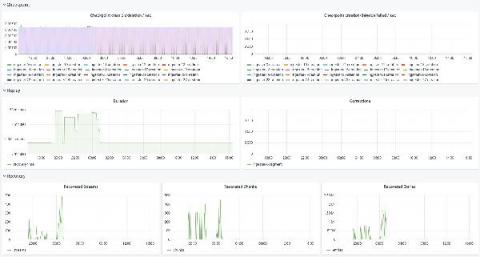
Sometimes a seemingly well-configured and fully-functional monitoring system can malfunction and lose metrics. Subsequently, you get a distorted picture of what is happening with the monitoring object. In this article, we will look at the possible causes of Graphite dropping metrics and how to avoid it. MetricFire specializes in monitoring systems. You can use our product with minimal configuration to gain in-depth insight into your environments.

Application Performance Monitoring: Why is it important for your organization?

Application Performance Monitoring (APM) refers to monitoring or managing the performance of your code, application dependencies, transaction times, & overall user experiences. It is an important technology that ensures the computer application programs are performing as expected. The ultimate goal of performance monitoring is to supply end users with a top quality end-user experience.

An Intro to PromQL: Basic Concepts & Examples

PromQL, short for Prometheus Querying Language, is the main way to query metrics within Prometheus. You can display an expression’s return either as a graph or export it using the HTTP API. PromQL uses three data types: scalars, range vectors, and instant vectors. It also uses strings, but only as literals. This intro will provide basic PromQL examples and concepts to understand as you get used to Prometheus queries.

How Puppet Supports DevOps Workflows in the Windows Ecosystem

For Windows teams that adopt a DevOps approach, augmenting their native toolset (GPO, SCCM, PowerShell) can offer reliable and repeatable processes that successfully affect change. This quick overview highlights how Puppet Enterprise can complement existing Windows tools for better visibility and transparency across the automation processes.

The essential config settings you should use so you won't drop logs in Loki

In this post, we’re going to talk about tips for securing the reliability of Loki’s write path (where Loki ingests logs). More succinctly, how can Loki ensure we don’t lose logs? This is a common starting point for those who have tried out the single binary Loki deployment and decided to build a more production-ready deployment. Now, let’s look at the two tools Loki uses to prevent log loss.