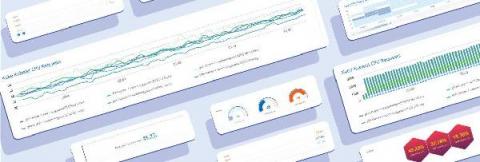
The monitoring and incident management process is often chaotic and time-consuming for organizations. However, there is a better way to approach IT incidents and make your existing process function better. Topology and relationship-based observability solutions take the incident management process from chaotic to structured. Let’s look into how StackState’s solution improves and speeds up the incident resolution process.
On Tuesday, January 26, 2021, Apple released iOS and iPadOS 14.4. As with previous releases, each new OS update is available to all Apple devices capable of running iOS and iPadOS 14. If you’re an IT admin, you should evaluate how you want to approach the latest release. Do you want to accelerate or slow down the updates? One concern we often hear about is that the apps that a company is deploying may not be compatible or may not have been tested with the latest release.
Dependence on digital business skyrocketed in the last year, with customers expecting seamless, always-on access to applications and digital services from any device, anywhere. This trend has placed developer and IT teams under more pressure than ever before to not only deliver these digital experiences, but keep them up and running at all times.
As a security analyst on Elastic’s InfoSec team, a common scenario we see is users coming to our team and asking: “Is this file safe to open?” Or one user reports a phishing email with an attachment that they didn’t open, but we see from the logs that 10 other users also received that email but didn’t report it and no alerts went off on their systems.
Context is king, they say, and anything you can do to improve context both makes decisions and assessments more reliable and speeds up the decision process. A new, bi-directional integration between Moogsoft Observability Cloud and Datadog does just that. Many SRE teams rely on Datadog to provide comprehensive information about their application stacks.
As one of the three pillars of observability, along with logs and traces, digesting metrics is a crucial part of any ITOps admins’ job. Metrics are a numeric representation of data measured over intervals of time and thus can derive knowledge of system behavior historically, which can help predict future patterns of behavior and inform investigations of issues and incidents.
In this blog we are going to describe how you can create a notable event policy in IT Service Intelligence (ITSI) that is able to group your events using labels generated by unsupervised machine learning in the Smart ITSI Insights App for Splunk – and don’t worry you don’t have to be a data scientist to read this blog!