When organizations shift to a work-from-home environment, identity and access management (IAM) takes center stage. Organizations with remote workforces must fortify their IAM policies and tools for a better user experience to ensure productivity, while also handling all the security challenges remote work presents to ensure data and system security. One of the biggest risks an organization faces when its workforce goes remote is unnecessary and unauthorized access to organizational data.
The COVID-19 pandemic has forced many companies to require employees to work from home. It’s a new normal for many, but at Grafana Labs our team has always recruited and operated with a remote-first culture in mind. To help everyone transition to a home office environment, we launched a new WFH series in which Grafana team members have been sharing their best advice for staying productive at home – yes, even if you have kids around.
Many of the available configuration management tools, such as Ansible, Terraform, Puppet, Chef, and Saltstack provide automation for infrastructure, cloud, compliance and security management, and integration for deployment and continuous deployment (CI / CD). But what is the best tool to start automating your particular environment? The difficult task of evaluating Configuration Management Tools prevents DevOps from evolving technically and proposing improvements to the environment they manage.
If you’re in enterprise IT, you’ve probably already looked into Microsoft’s Azure public cloud. Microsoft Azure offers excellent enterprise-grade features and tightly integrates with Office 365 and Active Directory. It also provides a managed Kubernetes service, AKS, that you can provision from the Azure portal.
In person, you can easily tell someone’s mood based on their body language and how they speak, but that’s much more difficult with text alone. Emojis are a great way to add tone to a piece of text and also help make text-based conversation feel more casual, relaxed, and fun. Thanks to emojis, we can chat with much more real emotion than you might get by being careful about your word choice or by including just the right number of exclamation marks and periods at the end of a sentence.
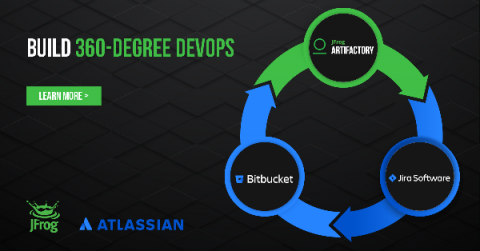
In agile development, planning, coding, and builds are an ongoing loop. But when a circle is broken, you can’t travel it at full speed. For users of Atlassian Bitbucket Server and Jira, JFrog’s integrations can help Artifactory bridge the gaps for continuous velocity. In a previous blog post, we discussed how to provide Jira information as a critical “why” in your build information.
History books will one day write about our time. What will they say? Worldwide pandemic caused governments to issue stay-at-home orders in 2020. People were advised to wear masks in public and keep six feet of distance. Rice, toilet paper, and household cleaners were impossible to find. It has been a major adjustment for everyone, to be sure. From the restaurant owners trying not to lose their businesses to the homeschooling parents trying not to lose their minds, we're all facing unique challenges.
Both DynamoDB and MongoDB are NoSQL databases, but the similarities probably end there. In this article, we cover their strengths and weaknesses in 8 basic categories, so that you can decide which one suits best your needs. While the data model behind Mongo is more flexible for storage and retrieval, Dynamo is stronger in terms of scalability, consistent performance under heavy load, and infrastructure abstraction.