April Customer Newsletter
Welcome to the April 2020 edition of the Tigera Calicommunication newsletter! In the March edition, we discussed context-aware flow logs. This edition covers the next component of logging, the audit logs.


Welcome to the April 2020 edition of the Tigera Calicommunication newsletter! In the March edition, we discussed context-aware flow logs. This edition covers the next component of logging, the audit logs.
In times of crisis and challenge, the best in humanity comes out. We all want to help, we all want to pitch in and we all desire safety and health for our loved ones and communities. And we ideally want to assist genuinely – in a way that helps others without strings attached. JFrog is no different.
The COVID-19 crisis has put organizations in a position where 100% of employees need to work remotely from their homes. Popular technologies used for supporting remote employees include Citrix virtual application and desktops, virtual desktop technologies based on VMware Horizon, cloud-hosted desktops (DaaS), or just VPN connectivity. Until now, remote access from home was something a small percentage of employees used.
For many of us, “working” is incredibly difficult right now. That’s true at the organizational level, where maintaining business continuity and accounting for changes in customer needs are even more critical. But it’s also true at the individual level, where the sudden shift to working from home has jolted us all into working in new ways, and made virtual collaboration an essential part of each workday.
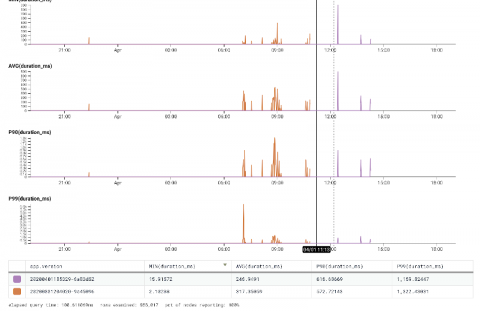
This is a guest post by Ryan Ordway, DevOps Engineer at Oregon State University. At Oregon State University Libraries & Press (OSULP) we have been using Honeycomb for about 18 months. We were in the beginnings of automating our infrastructure and needed an APM solution that we could scale with. New Relic was becoming too expensive, and we couldn’t afford to monitor our whole infrastructure and trace all of our applications anymore. Thus began our Observability journey.
In Part 2 of this two-part series, our goal is to provide security practitioners with better visibility, knowledge, and capabilities relative to malicious persistence techniques that impact organizations around the world every day. In this post, we’ll explore two additional persistence techniques that are being used by attackers in the wild: Scheduled Tasks (T1053) and BITS Jobs (T1197).
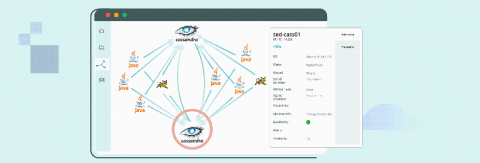
In this article, learn: Given that enterprises use a mix of physical, virtual, and cloud native infrastructure, it can be a struggle to maintain the availability and performance of digital services. OpsRamp's Topology Explorer delivers visual representations of dependency relationships between application components and hybrid infrastructure that feed into both service maps and service-centric AIOps.
Moving applications to a public cloud, no matter why you’re making that journey, is a high-stakes proposition. As an industry, we’re focused on rapidly moving forward to give our businesses the competitive edge they need. However, when it comes to cloud migration, we often fail to stop and ask some critical questions, and as a result we end up overspending and underperforming.
A world-leading genomic research centre, the Wellcome Sanger Institute uses advanced DNA sequencing technology for large-scale studies that surpass the capabilities of many other organisations. Among other works, the Institute is currently heading the UK-wide Darwin Tree of Life Project to map the genetic code of 60,000 complex species.