Operations | Monitoring | ITSM | DevOps | Cloud

AI in observability at Grafana Labs: Making observability easy and accessible for everyone

Did you know that observability has been around for more than six decades? It all goes back to a Hungarian-American inventor named Rudolf Kálmán who thought about how external outputs could measure the internal state of a machine. Kálmán wrote about monitoring single-input single-output systems, but our demands are very different today. We need to observe monoliths, microservices, clusters, pods, regions, and many more.

Network Switch Monitoring: How to Monitor Switch Performance with SNMP

If you’ve spent any time managing networks, you know the switch is the backbone that keeps everything connected, but it’s easy to take them for granted until something breaks. Monitoring network switches isn’t just “nice to have”; it’s critical if you want to avoid those sudden outages that bring everything to a halt.

Iceberg Topics for Apache Kafka: Zero ETL, Zero Copy

We’re rolling out table-formatted topics for Apache Kafka, enabling open-source users to ingest, process, and emit data natively as Apache Iceberg tables. We’ve developed a new class of topics in Apache Kafka that stream data into lakehouse formats such as Apache Iceberg. The developer experience, similar to Diskless, is flexible, and the topics are opt-in via cluster configuration.

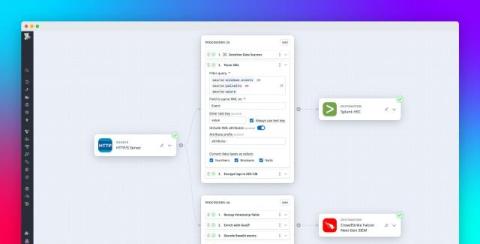
Simplify XML log collection and processing with Observability Pipelines

In Microsoft-based environments, Windows event logs capture critical security events like user logins, privilege escalations, and system changes. These logs are vital for compliance and investigations. However, they’re natively formatted in XML, a verbose and deeply nested structure that is hard to search without preprocessing and inefficient to store.

You built the MCP server. Now track every client, tool, and request with Sentry.

TL;DR - Starting today, you can instrument most server-side JavaScript SDK based MCP servers with one line of instrumentation code within your MCP SDK implementation. Click to Copy Click to Copy With this in place, you’ll be able to see details like protocol usage, client usage, traffic, tool usage, and performance across your MCP implementation.

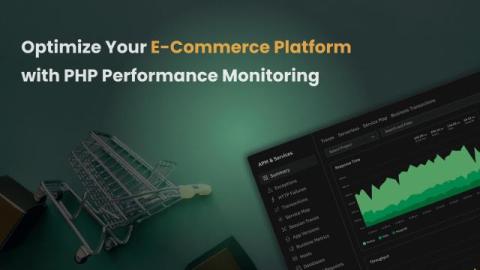
Optimize Your E-Commerce Platform with PHP Performance Monitoring

In e-commerce, seconds can mean millions. A one-second delay during checkout can slash conversion rates by 7% and send frustrated customers straight to your competitors. Most modern e-commerce platforms, such as Magento and WooCommerce, and Laravel-based solutions, run on PHP, making PHP application performance monitoring (APM) not just a nice-to-have, but a revenue-critical necessity.

Optimizing PHP-FPM: Tips to Boost Your PHP Application Performance

When your PHP-based application starts attracting thousands of visitors, the way you run PHP becomes critical. A slow-loading page or a server crash during peak hours can cost you revenue, users, and reputation. PHP-FPM (PHP FastCGI Process Manager) is the default way most high-performance websites run PHP. While its default configuration works fine for small to medium workloads, high-traffic applications need custom tuning to handle large volumes of requests efficiently.

Mastering Service Configuration in Icinga Director

The Icinga Director configuration tool makes it easy to define monitoring objects through the web UI and deploy them to the Icinga 2 API. In this blog post, I’ll walk you through how to configure services in Icinga Director. If you haven’t used Icinga Director yet, take a look at our introduction. I assume that most of you are already familiar with Icinga 2 and have used the DSL to define objects.