Operations | Monitoring | ITSM | DevOps | Cloud

When AI tools fail: How to map your AI dependencies for proactive visibility

AI platforms have experienced several service interruptions over the past few months. We’ve all seen the memes fly when ChatGPT, Gemini or Perplexity go down. They’re funny at first, but then reality hits: if you rely on AI tools for work or business, these outages can grind your day to a halt.

What Is Powershell? An Introduction

PowerShell is a command-line-based shell and scripting language that automates tasks on the Windows OS. PowerShell lets you automate any task normally done on Windows, like installing programs or updating software, allowing you to complete those tasks faster and on a larger scale. You can even extend its powers with Azure PowerShell to control Azure’s robust functionality, allowing you to use cmdlets to provision VMs, create cloud services, and carry out a number of other complex processes.

Top B2B eCommerce Strategies for 2025: Less Hassle, More Sales

B2B eCommerce is finally catching up. While B2C has spent the last decade perfecting oneClick checkouts and AI-powered recommendations, B2B has been stuck in the past—relying on email chains, phone orders, and clunky procurement systems. But that’s changing. Fast. With B2B eCommerce sales already more than double D2C sales (we’re talking $7.7 trillion vs. $3.8 trillion), companies are finally realizing they need to streamline and automate the way they sell.

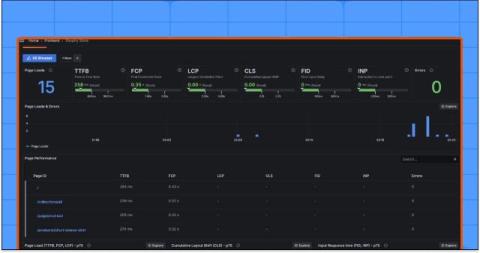
How to monitor your Shopify store with Grafana Cloud Frontend Observability

Shopify is a fantastic tool for organizations who want to sell products, but don’t want to build or maintain an e-commerce platform themselves. Even some of the largest brands that have built their own e-commerce platforms in the past have seen the value of using Shopify to accelerate their business. As your Shopify site scales and grows, however, you may need more insight into the performance of your store.

How I Code With LLMs These Days

I first started using AI coding assistants in early 2021, with an invite code from a friend who worked on the original GitHub Copilot team. Back then, the workflow was just single-line tab completion, but you could also guide code generation with comments and it’d try its best to implement what you want. Fast forward to 2025. There’s now a wide range of coding assistants that are packed with features.

Challenges in Kubernetes monitoring and how to overcome them

Kubernetes has revolutionized how organizations deploy, scale, and manage containerized applications, offering unprecedented efficiency and flexibility. However, the very characteristics that make Kubernetes so powerful—its dynamic, distributed, and ephemeral nature—also create significant challenges for monitoring. Without robust monitoring capabilities, organizations struggle to identify and resolve performance bottlenecks, optimize resource utilization, and maintain security.

Building Your First Python Plugin for the InfluxDB 3 Processing Engine

One of the most compelling features of InfluxDB 3 is its built-in Python Processing Engine, a versatile component that adds powerful, real-time processing capabilities to both InfluxDB 3 Core and Enterprise. For those familiar with Kapacitor in InfluxDB 1.x or Flux Tasks in 2.x, the Processing Engine represents a more streamlined, integrated, and scalable approach to acting on data.

Work faster with Sumo Logic: Mo Copilot, Otel Remote Management and more

Are you tired of always digging through data and not finding what you're looking for? We get it. Troubleshooting and data analysis should be easier, not harder, especially when time is of the essence. To simplify your work life, we’ve introduced several powerful new features designed to eliminate wasted time and help you focus on what matters: less time troubleshooting and more time building.

Monitoring single-page app interactivity with Core Web Vitals and Datadog

Web applications generate a wealth of performance data, but it’s challenging to know exactly which metrics are the most useful for monitoring your user experience. Focusing on irrelevant metrics wastes time and resources—but if you pare down the data you’re observing too much, you may miss critical insights.

Java on containers: a guide to efficient deployment

Java remains one of the most widely used programming languages today, especially in enterprise backend systems—and for many good reasons. With each new release, Java’s robust runtime offers additional improvements in performance, security, scalability, and developer productivity. The portability of its code has proven increasingly relevant and useful as the industry embraces ARM64, making Java one of the go-to languages for modern workloads.