The latest News and Information on Monitoring for Websites, Applications, APIs, Infrastructure, and other technologies.
If you work with large amounts of log data, you know how challenging it can be to analyze that data and extract meaningful insights. One way to make log analysis easier is to normalize your log messages. In this post, we’ll explain why log message normalization is important and how to do it in Graylog.
Today, businesses and organizations rely heavily on metrics and analytics to make informed decisions. Metrics are important whether you’re a developer, a marketer, or the head of a company. One type of metric that is widely used is a time-series metric. Time-series metrics provide insights into how data changes over time. With time-series data, businesses can track trends, detect anomalies, and make predictions.
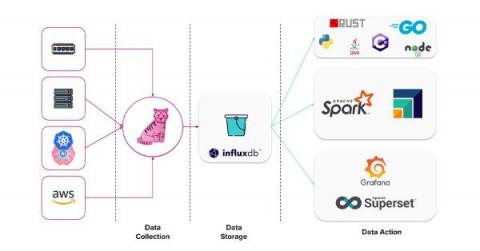
InfluxDB 3.0 is a versatile time series database built on top of the Apache ecosystem. The 3.0 product suite includes two cloud-based versions: InfluxDB Cloud Serverless, and InfluxDB Cloud Dedicated. For the purposes of this post, InfluxDB Cloud refers to these specific versions of InfluxDB. This post provides an update on the status of the client libraries for InfluxDB Cloud, as well as all the available resources to get started querying and writing data to InfluxDB.
Quickly: if you’re interested in observability for LLMs, we’d love to talk to you! And now for our regularly scheduled content: In early May, we released the first version of our new natural language querying interface, Query Assistant. We also talked a lot about the hard stuff we encountered when building and releasing this feature to all Honeycomb customers. But what we didn’t talk about was how we know how our use of an LLM is doing in production!
Cybersecurity remains a key concern for any organization. The cost of cybercrime is expected to rise to $8 trillion in 2023 and reach $10.5 trillion by 2025. Various cybersecurity solutions are available, with Firewall as a Service (FWaaS) emerging as one of the most valuable assets when it comes to protecting your interests. We will investigate FWaaS solutions, how they work, how they're different from traditional firewalls, and what benefits they can provide for a range of organizations.