Operations | Monitoring | ITSM | DevOps | Cloud

The latest News and Information on Monitoring for Websites, Applications, APIs, Infrastructure, and other technologies.

OpenObservability Talks Second Year at a Glance

I can’t believe that OpenObservability Talks podcast is already celebrating its second anniversary. It feels like just yesterday I wrote the summary of the summary of the first year, sharing the hectic times of starting a podcast in the midst of the COVID-19 global pandemic. The pandemic has been with us most of this year too, but it didn’t stop us from bringing the latest on the best of breed open source observability.
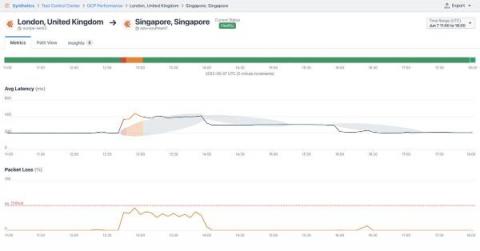

Outage in Egypt impacted AWS, GCP and Azure interregional connectivity

On Tuesday, June 7, internet users in numerous countries from East Africa to the Middle East to South Asia experienced an hours-long degradation in service due to an outage at one of the internet’s most critical chokepoints: Egypt. Beginning at approximately 12:25 UTC, multiple submarine cables connecting Europe and Asia experienced outages lasting over four hours. As I show below, the impacts were visible in various types of internet measurement data to the affected countries.

Using High Availability Capabilities to Make Migration of the Monitoring System Simple

A monitoring tool and its backend database Monitoring platforms such as eG Enterprise collect large numbers of metrics and data points about the applications and infrastructure being monitored. As the complexity of the applications, the number of tiers and the scale of the infrastructure grows, so do the number of metrics that need to be analyzed. Even in a mid-sized IT infrastructure, there may be over 100s of thousands of metrics collected and analyzed over time.

Elastic recognized as a Visionary in the 2022 Gartner Magic Quadrant for APM and Observability for the second consecutive year

We are excited to announce that Elastic has been recognized as a Visionary in the 2022 Gartner Magic Quadrant for APM and Observability for the second year in a row. In addition, the Elastic solution scored among the Top 3 vendors in five out of six use cases in the 2022 Gartner Critical Capabilities for APM and Observability.

Implementing OpenTelemetry in React applications | Tutorial

More about SigNoz: SigNoz - Monitor your applications and troubleshoot problems in your deployed applications, an open-source alternative to DataDog, New Relic, etc. Backed by Y Combinator. SigNoz helps developers monitor applications and troubleshoot problems in their deployed applications. SigNoz uses distributed tracing to gain visibility into your software stack. If you need any clarification or find something missing, feel free to raise a GitHub issue with the label documentation or reach out to us at the community slack channel.

Installing and Configuring the OpenTelemetry Collector

The scope of the OpenTelemetry project encompasses how telemetry data is collected, processed, and transmitted. The OpenTelemetry project is not involved with how the data is stored, displayed, or used beyond the collection and transmission phases. The OpenTelemetry Collector is an application written in Go.

Optimize Continuous Delivery of Micro-Services Applications with Continuous Performance Testing

I often hear from customers who complain about how “classic” performance testing (i.e., end-to-end testing with high volume of virtual users) of their applications before release slows down the cycle time by several weeks. In addition, the testing significantly consumes both people and infrastructure (hardware and software license) resources.

Key Takeaways - Logz.io Named a Visionary in 2022 Gartner Magic Quadrant for Application Performance Monitoring and Observability

I’m thrilled to announce today that Logz.io has been named a Visionary in the 2022 Gartner® Magic Quadrant™ for Application Performance Monitoring and Observability. Gaining this recognition from these leading industry experts, in my opinion, is an outstanding accomplishment for our entire organization – the product of years of hard work and putting the needs of our 1,300-plus customers first.

Optimizing Images for Web Performance with NGINX

Images are a constant source of pain when developing websites. There are many formats and resolutions a developer must consider in order to maximize web performance. You’ll often end up with a cartesian explosion of the same image in different sizes and formats to support different scenarios. For example, you don’t want to send a high res image meant for high DPI screens to a low DPI screen - you’d be wasting bandwidth and burning time. Using the right file format is equally important.