The latest News and Information on Monitoring for Websites, Applications, APIs, Infrastructure, and other technologies.
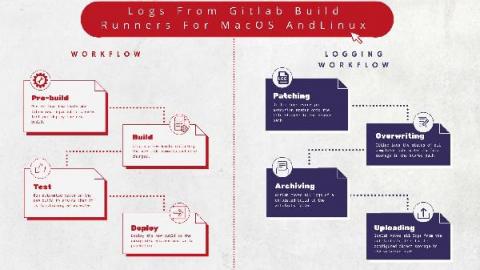
Gitlab is the DevOps lifecycle tool of choice for most application developers. It was developed to offer continuous integration and deployment pipeline features on an open-source licensing model. GitLab Runner is an open-source application that is integrated within the GitLab CI/ CD pipeline to automate running jobs in the pipeline. It is written in GoLang, making it platform agnostic. It is installed onto any supported operating system, a locally hosted application environment, or within a container.
It is incumbent on cloud operations teams to choose the correct type of AWS EC2 instance relative to the underlying application. The wrong choice could adversely impact business and user experience. This article walks through a customer case study where the EC2 instance choice impacted their business.
Meeting the goal of delivering great performance and reliability in the face of our ever-changing, increasingly autonomous IT environments is fundamentally challenged by a data problem. Sure, there’s lots of it - logs, metrics, and APM traces - but it is exceedingly hard to extract actionable information when there are so many fast moving parts.
Broadcom is proud to be named a “Value Leader” in the 2021 EMA Radar Report For Network Performance Management. Broadcom received the highest vendor strength score and was selected as having the best alert and alarm management. We believe this recognition validates our strong NetOps vision and our ability to speed the delivery of new network monitoring software innovations that help address the network transformation challenges of our customers.
As a Nexthink V6 Customer, you’re already realizing the power and value of a proactive, Digital Employee Experience (DEX) management solution: more productive employees, reduction in employee issues, and a smoother, more accelerated time-to-resolution for employee-reported IT issues.
ZE PowerGroup Inc. is a British Columbia-based software company. It offers ZEMA, an award-winning data management, analytics, and integration platform. Although ZEMA was created in-house, the developers at ZE were never successful at measuring the performance of the application during the initial years. They tried a few third-party tools, but measuring the actual application performance continued to be a dilemma until they evaluated ManageEngine’s Applications Manager.
In this tutorial, we will go through a working example of a Ruby application auto-instrumented with OpenTelemetry. To keep things simple, we will create a basic “Hello World” application, instrument it with OpenTelemetry’s Ruby client library to generate trace data and send it to an OpenTelemetry Collector. The Collector will then export the trace data to an external distributed tracing analytics tool of our choice.