The latest News and Information on Monitoring for Websites, Applications, APIs, Infrastructure, and other technologies.
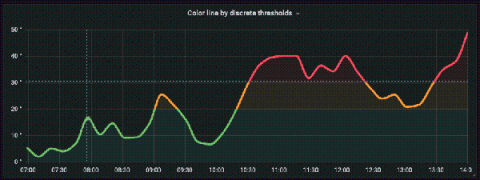
Grafana 8 brought with it many exciting new features, including the launch of a new alerting system and the expansion of Grafana’s live and streaming data functionality. We didn’t stop there. In Grafana 8.1, alongside new additions like the Geomap and Annotations panel, we introduced some new features to the Time series panel as well as two transformations to help make panel configuration more dynamic.
The IT department of an organization is tasked with helping maintain the productivity of their Microsoft Teams and Microsoft 365 services, facilitating effective service delivery for all users. The executives of the business (VIPs) are sensitive to optimized performance as they must regularly conduct very important calls and meetings.
Arm-based Kubernetes clusters have been in use for a while, albeit mostly for niche uses, by enthusiasts, and DIY hobbyists. But that is changing. Arm architecture offers an efficiency and scalability that other architectures do not, and that makes it appealing to businesses.
On this day in 1984, Canadian-American Alex Trebek made his first appearance as host for the daily syndicated version of Jeopardy!
Software developers use the Node.js environment to develop robust and innovative applications. But the bigger the goal, the higher the risk. Learn about Node.js performance monitoring to ensure quality and risk-free software products. Part of diligent software development is making sure all system applications work well individually and as a whole.
Mean time to innocence (MTTI) is a term used by IT teams to prove that their respective domain is not the source of a particular issue. In other words, it’s a fancy term to avoid blame when something goes wrong. Each team has its own domain-specific tools to prove the issue is not their fault. With respect to desktop virtualization, here are just some of the domains that are relevant when diagnosing issues.
The fast-paced adoption of digital workplace technologies provides fantastic opportunities to improve digital employee experience (DEX). But it comes at a cost. Digital technology has a serious—and increasing—impact on our environment, with a carbon footprint of about 4% of global carbon emission (that’s more than the aviation industry’s 2.5% contribution).