The latest News and Information on Monitoring for Websites, Applications, APIs, Infrastructure, and other technologies.
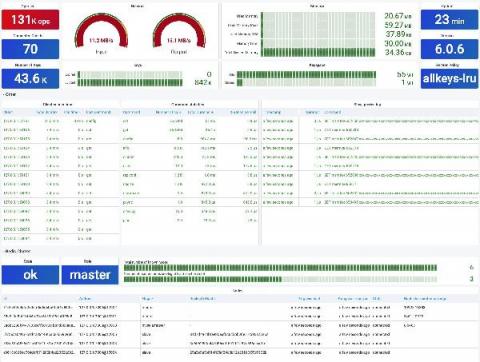
Mikhail Volkov is building observability and monitoring solutions at Volkov Labs and leading Redis plugins for Grafana. Since the Redis project first got underway in 2009, the open source in-memory data store has been embraced by thousands of companies of all types and sizes. According to Stackshare.io, well over 5,000 companies use Redis, including Uber, Airbnb, Twitter, Instagram, and Slack.
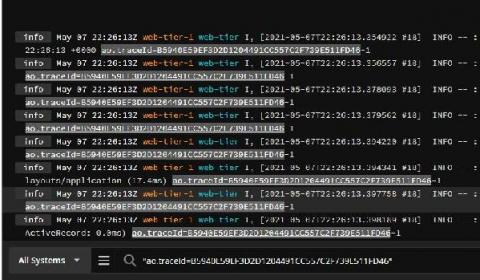
Auto-instrumenting AWS Lambda Monitoring didn’t originate through a focus group or business plan. It started as a hackathon project that addressed the tedium of removing manual code instrumentation. Developer environments often include hundreds of AWS Lambda functions. And our existing instrumentation required initialization code to be manually placed on every single function.
With the Honeycomb extension for AWS Lambda, you no longer need to make your Lambda functions Honeycomb-aware. Today, AWS announced the general availability of AWS Lambda Extensions, which make it easy for us to send logs from your Lambda functions directly to Honeycomb. In October, we announced Honeycomb’s extension for AWS Lambda as part of a preview launch. Today, we’re pleased to announce everyone can now use this extension to easily debug their AWS Lambda functions with Honeycomb.
OpsRamp recently conducted a survey on the State of Digital Operations Management in 2021 to understand IT investments in 2021, factors hindering organizational innovation and the steps IT leaders are taking to unleash creativity and growth across the organization. We discussed the survey on a webinar featuring OpsRamp Chief Revenue Officer Sheen Khoury and Isaac Sacolick, president of digital transformation consultancy StarCIO. Here are the key highlights of the conversation.
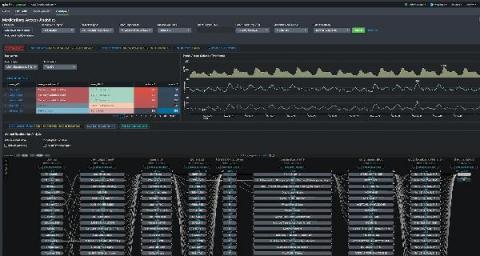
This is Part 3 of the Advanced Link Analysis series, which showcases the interactive visualization of advanced link analysis with Splunk partner, SigBay. The biggest challenge for any data analytics solution is how it can handle huge amounts of data for demanding business users. This also puts pressure on data visualization tools. This is because a data visualization tool is expected to represent reasonably large amounts of data in an intelligent, understandable and interactive manner.
In this post, we will discuss some of the primary commands, tools, and techniques that could help to monitor CPU Memory and Disk Usage in Java. The Java tools observe Java bytecode constructs and processes. Java Profilers follow all system commands and processor usage. This lets you look at call arrangement at whatever point you prefer.