Operations | Monitoring | ITSM | DevOps | Cloud


The latest News and Information on Monitoring for Websites, Applications, APIs, Infrastructure, and other technologies.
Motadata ServiceOps ITSM Platform - A Quick Overview
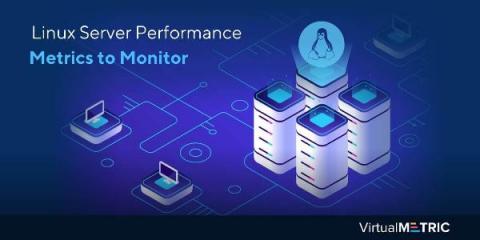
Linux Server Performance Metrics to Monitor
Linux is one of the most popular and widely used open-source operating systems in the world today. It provides the key advantage of stability, compatibility, security and customization. Since Linux servers are the backbone of an organization’s IT infrastructure, a sudden change in the CPU usage or memory can adversely affect the performance of applications.

Checklist for Application Performance and Availability
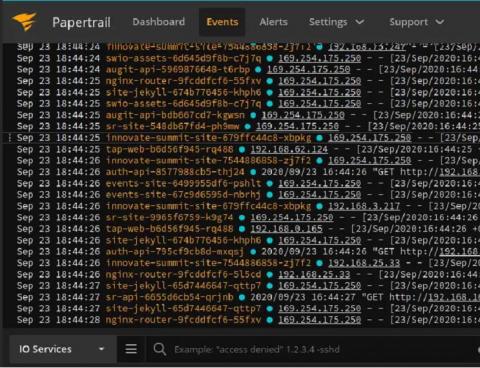
Quick and Easy Way to Implement Kubernetes Logging
Docker Compose, introduction to container orchestration with Pandora FMS
We continue with our series of articles on containers. First, we started with creating our own images with Docker Build and saw how to run them with Docker run. But today we will learn what Docker Compose is and start our journey into the world of container orchestration. Up to now we have managed containers manually and separately, which for some specific test may be valid and functional. But when the number of containers to manage starts growing, this method becomes infeasible.

The Complete AWS Lambda Handbook for Beginners (Part 3)
Welcome to the final installment of our Complete AWS Lambda Handbook series! Given Lambda is often the central point for many serverless applications, we wanted to make sure we didn’t skip or breeze past any part. In this episode, we’re looking at some limitations and difficulties using AWS Lambda and how to overcome them, and the importance of monitoring for performance and failure remediation.

Adding Tracing with Jaeger to a TypeScript express application
I have been following distributed tracing technologies — Zipkin, OpenTracing, Jaeger, and others — for several years, without deeply trialing with any of them. Just prior to the holidays, we were having a number of those “why is this slow?” questions about an express application, written in typescript, providing an API endpoint.
Dedicated, On-Demand, Reserved and Spot- Demystifying the Terminology of AWS Instances
So you’ve got an app ready for launch, and unlike in the past where you simply ran it on-premises, this time you want to try the cloud. You know AWS is the leading cloud platform, and decide to give it a go. The first thing you’ll bump into as you learn about AWS is the various options of cloud instances available with AWS EC2.