Sysdig Expands Unified Monitoring Across IBM Cloud Services Globally
IBM Cloud Monitoring with Sysdig available globally, includes view of monitoring and visibility across entire IBM public cloud portfolio.


The latest News and Information on Monitoring for Websites, Applications, APIs, Infrastructure, and other technologies.
Cisco Meraki provides a range of IT infrastructure devices—like network security appliances, switches, and wireless access points. As your on-prem infrastructure grows and you add potentially thousands of Meraki devices to your network, it becomes a challenge to get visibility across your entire fleet of devices.
AWS Fargate allows you to run applications in Amazon Elastic Container Service without having to manage the underlying infrastructure. With Fargate, you can define containerized tasks, specify the CPU and memory requirements, and launch your applications without spinning up EC2 instances or manually managing a cluster. Datadog has proudly supported Fargate since its launch, and we have continued to collaborate with AWS on best practices for managing serverless container tasks.
NiCE IT Management Solutions is proud to serve global key-players in advanced Oracle database performance and health monitoring. Read the latest customer reference on how the NiCE Oracle Management Pack is helping a global Oil & Gas company in standardized, IT Governance compliant Oracle operations.
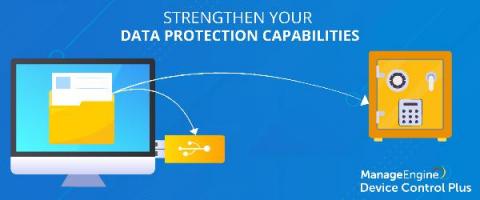
USB devices are undeniably valuable, but they can be dangerous. On one hand, they are useful in transporting enterprise-critical data, but on the other, they can wreak havoc if misplaced, corrupted due to a human or hardware-related error, or stolen. It’s no wonder some companies forbid the use of USB devices altogether.
Digital transformation can be a rewarding endeavor for any enterprise, especially now considering the current remote work scenario. Often, organizations leverage the support of the cloud to set up robust digital transformation frameworks. The cloud offers scalability, making it easy to scale up or down. The cloud is also far more dynamic in terms of consumption—you pay for what you use.
Logging is a feature that virtually every application must have. No matter what technology you choose to build on, you need to monitor the health and operation of your applications. This gets more and more difficult as applications scale and you need to look across different files, folders, and even servers to locate the information you need. While you can use built-in features to write Python logs from the application itself, you should centralize these logs in a tool like the ELK stack.