
Operations | Monitoring | ITSM | DevOps | Cloud

The latest News and Information on Observabilty for complex systems and related technologies.

Understanding Event Correlation: A Key Component in Modern Observability Tools

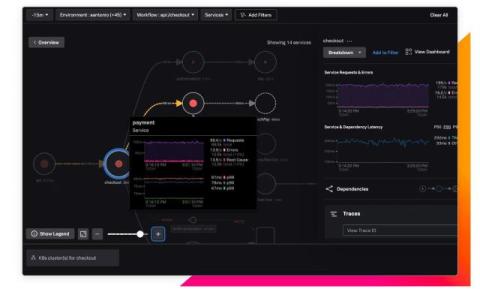
Event correlation is a critical aspect of modern IT management, involving the analysis and correlation of events to filter out noise and isolate significant events requiring attention. This process helps quickly identify the root cause of issues, reducing the time it takes to resolve incidents and ensuring smoother operations. Key reasons for event correlation include reducing noise data and identifying root causes efficiently.

Unified Observability: Benefits of Tool Consolidation with Apica

Tool Sprawl is real and unified observability is the key to unlocking this hindrance, along with the many others in your IT monitoring. Some say that the golden era of software development is already gone, and some say that it has just started with the advent of AI. Nevertheless, with the ease of microservices, containerization and open-source adoption, the recent years have certainly become the glory days for SaaS organizations. But innovation almost always brings with it challenges.

14 benefits of using Site24x7 in Kubernetes observability

Launched in June 2014 as an open-source container orchestration software, Kubernetes is now ten years old. Being increasingly adopted by organizations of all sizes, Kubernetes has today become an essential part of the IT landscape. Kubernetes now completes the modern IT picture, along with Linux, the cloud, and containers that form the backbone of how most IT applications are developed and delivered.

OpenTelemetry Best Practices #3: Data Prep and Cleansing

Having telemetry is all well and good—amazing, in fact. It’s easy to do: add some OpenTelemetry auto-instrumentation libraries to your stack and they’ll fill your disks with data pretty quickly. However, having good telemetry data—data that’s curated into being useful—is something that is both cost-effective and represents good value.

Coralogix new observability solution now available for enterprises

Coralogix continues to invest in and develop solutions to address modern business challenges. One such example of modern business challenges is the field of observability with data complexity and volume increasing all the time. Observability solutions play a key role in digital transformation and operational excellence, helping companies aggregate a growing amount of data, effectively analyze it, and initiate the needed actions to maintain optimal performance and uptime.

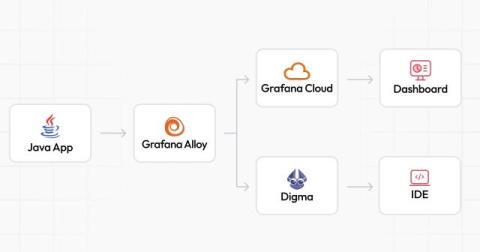
Shorten your feedback loop: Java observability with OpenTelemetry, Grafana Cloud, and Digma.ai

Ron Dover is CTO and co-founder of Digma.ai, an IDE plugin for code runtime AI analysis to help accelerate development in complex code bases. Ron is a big believer in evidence-based development and a proponent of continuous feedback in all aspects of software engineering. Traditionally, software developers have relied on simple logs to understand code execution and troubleshoot issues.

Leading Observability Interview Questions

If you're aiming for a position that demands strong monitoring and observability skills, thorough preparation is essential. In this comprehensive guide, we will provide an extensive list of the most frequently asked interview questions about the three pillars of observability; logs, metrics and tracing. Each question is also accompanied by detailed, well-explained answers to ensure that you fully understand the concepts and can confidently demonstrate your expertise.

Experience Full Application Observability with Logz.io App 360

Welcome to our comprehensive demonstration of Logz.io App 360, the ultimate observability solution designed for modern microservices and cloud-native environments. In this video, we will showcase how App 360 can revolutionize your approach to application performance monitoring by providing a unified view of logs, metrics, and traces.

Harnessing the Power of Splunk APM Business Workflows in IT Service Intelligence

As an Observability Strategist at Splunk, I have the unique privilege of partnering with a diverse range of Splunk customers across various industries. This partnership offers me a deeper insight into their essential Observability use cases, how they are utilizing Splunk’s Observability solutions, and their specific needs to maximize both value and efficiency in their Observability practices.

Don't observe. Debug.

The term “observability” is a strange one. We understand its value as a way to describe a sophisticated approach to monitoring complex distributed systems and microservices. But the term is inherently passive (and let’s be honest. It’s a bit of a loaded marketing term). Simply “observing” doesn’t help you solve problems – especially if you are inundated with loads of non-actionable data.