Operations | Monitoring | ITSM | DevOps | Cloud

The latest News and Information on Observabilty for complex systems and related technologies.

Using eBPF for modern IT observability: challenges and opportunities

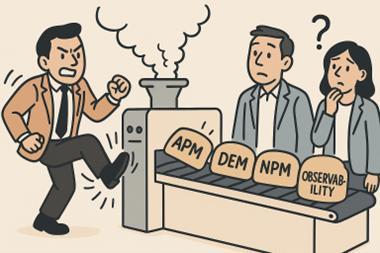
Modern IT demands modern observability that flows with its dynamism and all-encompassing approach. Modern observability must overcome the constraints suffered by traditional monitoring due to its custom-built agent-based architectures. Monitoring tools converge poll-based methods with log analysis and application performance monitoring (APM), a process that can be slow and lacking in granularity that today's complex environments demand.

DX Operational Observability: Troubleshoot WebHook Notification Channels with WebHook Data Collector

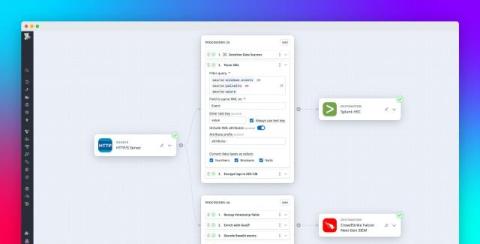
The power of AIOps and Observability relies on the ability to ingest, normalize, and correlate the large volumes and huge variety of data available to IT operations teams. With its support for both Broadcom and third-party data, DX Operational Observability (DX O2) gives these teams unmatched observability and insights. With so much data coming to DX O2, monitoring operators need to be notified when important events may occur: Without notifications, important alerts may be overlooked.

Troubleshoot microservice-based apps faster with Splunk Observability Cloud

When something goes wrong with your microservice-based apps, Splunk Observability Cloud offers a unified Observability platform to make debugging processes easier and faster. By using features like the Service Map to identify the cause of the error and Related Logs in Log Observer to pinpoint its location, you can get back up and running quickly, limiting the impact to your bottom line and keeping your customers happy.

Enabling Design System Observability Using Honeycomb

At Honeycomb, we’re actively growing our design system, Lattice, to ensure accessibility, optimize performance, and establish consistent design patterns across our product. One metric we use to measure Lattice is the adoption of components across the product. Adoption is about understanding how, where, and why they’re being used.

Simplifying public sector observability with OpenTelemetry and Elastic

Public sector organizations today face unique challenges in maintaining and optimizing their IT infrastructure and prioritizing efficiency and interoperability. With a mix of modern cloud and legacy systems, ensuring consistent performance, reliability, and security is paramount. To effectively observe across these environments, government agencies need observability tools that are open, flexible, and scalable. OpenTelemetry (OTel) is fast becoming a pivotal part of that flexible toolset.

Coroot v1.9: Kubernetes-Native Database Monitoring Made Easy

From day one, we built Coroot to work beyond just Kubernetes. Many teams still run databases and other stateful services on dedicated VMs or bare-metal servers. But that’s starting to change. More and more teams no longer see Kubernetes as a platform just for stateless apps. Powerful Kubernetes operators now handle day-2 operations like failover, backups, and disaster recovery—making it easier than ever to run databases on Kubernetes. And the number of teams choosing this path keeps growing.

The Future of Dynamic Observability with Sumo Logic -- Customer Brown Bag -- March 27th, 2025

Join us as Sr. Dir. Technical Marketer, Adam White, and Sr. Product Marketing Manager, Hadijah Creary, go beyond the usual technical deep dive—focusing on the mindset, industry trends, and thought leadership shaping modern observability and the future of dynamic observability with Sumo Logic.

License to observe: Why observability solutions need agents

Note: The original version of this blog post published on ;login: on February 24, 2025. When architecting the flow of observability data such as logs, metrics, traces or profiles, you’ve likely noticed that most solutions ask you to deploy an agent or collector. Understandably, you might be hesitant to deploy yet another application just so you can get your data into your storage system of choice.

Infrastructure Observability: Optimizing Every Layer with Innovative New Capabilities

Modern IT environments are complex, spanning on-premises, cloud, and hybrid infrastructures. Without deep observability at every layer, performance bottlenecks, inefficiencies, and troubleshooting challenges can drain resources and impact business outcomes. Virtana’s latest Infrastructure Observability enhancements are designed to eliminate blind spots, automate performance tuning, and simplify IT operations.