Operations | Monitoring | ITSM | DevOps | Cloud

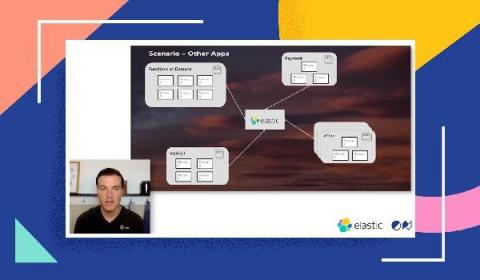
Made @ Elastic | Going distributed with Workplace Search

Teams around the world are going through changes. With offices closed from Hong Kong to San Francisco, Zoom meetings are the new norm, and online platforms are the standard for collaborating and keeping businesses running as usual. We’ve written about distributed work and how doing distributed well requires the right tools. When a traditional office environment isn’t available, information naturally becomes fractured across multiple single-purpose platforms.

Improving search relevance with data-driven query optimization

When building a full-text search experience such as an FAQ search or Wiki search, there are a number of ways to tackle the challenge using the Elasticsearch Query DSL. For full-text search there’s a relatively long list of possible query types to use, ranging from the simplest match query up to the powerful intervals query.

8 Common Elasticsearch Configuration Mistakes That You Might Have Made

Elasticsearch was designed to allow its users to get up and running quickly, without having to understand all of its inner workings. However, more often than not, it’s only a matter of time before you run into configuration troubles. Elasticsearch is open-source software that indexes and stores information in a NoSQL database and is based on the Lucene search engine. Elasticsearch is also part of the ELK Stack.

How to Add a Data Node to your Elasticsearch Cluster

Have you ever had trouble working with Elasticsearch clusters? You’re not alone. In this post, I will discuss a problem I’ve encountered working with large Elasticsearch clusters and how I solved it. I will share a lot of knowhow on major technical Elasticsearch concepts, some diagrams for illustration, and of course a cool solution! In particular, I will go into Elasticsearch nodes, indices, and shards.

Analyzing Elastic Workplace Search usage in a Kibana dashboard

Let’s start off with some good news: since 7.9.0, your Elastic Workplace Search deployment has been collecting and logging product usage data for you and your team. Usage data like, what your users are searching for, what links they're actually clicking on, and which searches are falling short. And better yet, in a future release we’ll be putting a prebuilt Workplace Search analytics dashboard at your fingertips in Kibana, one of the most powerful visualization tools available.

Save space and money with improved storage efficiency in Elasticsearch 7.10

We're excited to announce that indices created in Elasticsearch 7.10 will be smaller. Bigger isn't always better, and our internal benchmarks reported space reductions up to 10%. This may not seem like much for small use cases, but it's huge for teams handling (and paying for cloud storage of) petabytes of data.

Migrating from Swiftype App Search to Elastic Cloud

Whether you consume App Search from Elastic or from Swiftype, you’re getting a set of robust APIs and unprecedented relevance controls to deliver amazing search experiences. But what if you could have that same powerful set of search tools, only better, faster, more flexible, and still built on the powerful, scalable foundation of Elasticsearch? We’d like to invite you to migrate your Swiftype App Search deployment over to App Search on Elastic Cloud.

Why should you use Elasticsearch on your website?

In this post we’re covering a range of the best reasons why you should consider using Elasticsearch for your business or website. We’ve brought together some of our favourite experts working in eCommerce and Technology to let us know why they love using Elasticsearch for their projects & why they would recommend this powerful search engine. Two of the biggest reasons for using Elasticsearch were detailed by Usama Raudo, Marketing Strategist at Within The Flow.

Benchmarking and sizing your Elasticsearch cluster for logs and metrics

With Elasticsearch, it's easy to hit the ground running. When I built my first Elasticsearch cluster, it was ready for indexing and search within a matter of minutes. And while I was pleasantly surprised at how quickly I was able to deploy it, my mind was already racing towards next steps. But then I remembered I needed to slow down (we all need that reminder sometimes!) and answer a few questions before I got ahead of myself.