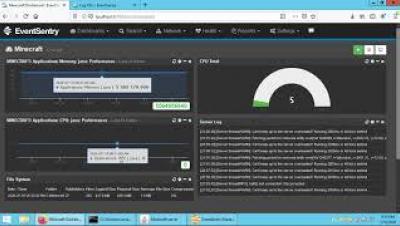
Monitoring a Minecraft server on Windows
How to monitor the logs and performance metrics of a Java-based Minecraft server on Windows with EventSentry.


The latest News and Information on CyberSecurity for Applications, Services and Infrastructure, and related technologies.
The HAProxy Kubernetes Ingress Controller integrates with cert-manager to provide Let’s Encrypt TLS certificates. When it comes to TLS in Kubernetes, the first thing to appreciate when you use the HAProxy Ingress Controller is that all traffic for all services travelling to your Kubernetes cluster passes through HAProxy. Requests are then routed towards the appropriate backend services depending on metadata in the request, such as the Host header.
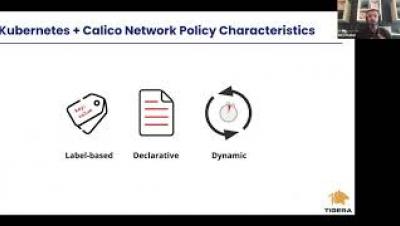
Kubernetes (k8s) enables you to efficiently orchestrate container management, in the cloud or on-premises. As a whole, k8s provides many benefits, including features for self-healing, automated rollouts and rollbacks, load distribution, and scalability. However, k8s is a highly complex platform and requires extensive configuration.
In case 2020 wasn’t dystopian enough, here’s some more unbelievable news. On July 15, 2020, social media giant Twitter admitted it fell victim to a security breach. The attackers targetted 130 Twitter accounts, including several belonging to high-profile individuals such as elected officials; former president Barack Obama; and business leaders including Bill Gates, Jeff Bezos, and Elon Musk.
Our latest announcement comes in the form of another exciting partnership, this time with Qualys! A leading provider of disruptive cloud-based IT, security, and compliance solutions, Qualys has integrated Ivanti Patch Management technology into their Qualys VMDR (Vulnerability Management Detection Response) platform.
Security is easy, right? Get yourself a patchwork of security point products meant to solve one or two specific problems, and your organization is safe from threats! Ah, if only it were that simple… In reality, security operations are disjointed and complex. Security visibility and functionality (i.e. threat detection, investigation, containment and response capabilities) are often divided among a multitude of different security products (e.g.