Operations | Monitoring | ITSM | DevOps | Cloud

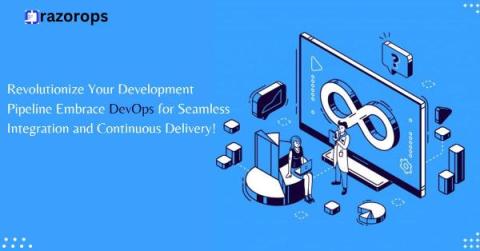
Revolutionize Your Development Pipeline Embrace DevOps for Seamless Integration and Continuous Delivery

Traditional development methodologies are being replaced by more efficient and collaborative approaches like DevOps. By integrating development (Dev) and operations (Ops) teams, DevOps streamlines the software delivery process, leading to faster time-to-market, improved product quality, and increased customer satisfaction.


The Unplanned Show, Ep. 29: Major Incident Management with Davis and Chris

Not all incidents are created equal. How do you handle major incidents so that they don't spiral into a chaotic mess, incinerating productivity across too many teams? How do you prevent major incidents and learn from the ones you've had? "Major Incident Management" has been a practice for a long time, but as companies depend even more on digital services and revenue channels, while trying to do more with the same or less, something has to change.

Top Distributed Tracing Tools [updated for 2024]

Distributed tracing tools are essential in modern software development and operations for monitoring, troubleshooting, and optimizing complex distributed systems. The best tracing tools can help you eliminate performance bottlenecks and recover from incidents faster. Use this guide to pick the right one for you.

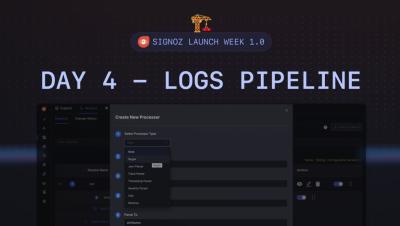
SigNoz Launch Week - Day 4 - Logs Pipeline

For day 4, we will showcase the recent work we have done in Logs Pipeline. With Log Pipelines, you can transform logs to suit your querying and aggregation needs before they get stored in the database. Pipelines provide a way to modify the structure and content of log data without needing to change application code or redeploy components. By extracting relevant attributes from logs, pipelines enable more efficient analysis.

IT Compliance: Regulations, Standards and Best Practices to Follow

In 2023, a striking 63% of companies reported plans to ramp up their investment in IT risk management and compliance. This upward trend underscores not only the need for investment but also the critical necessity of keeping pace with regulatory standards. As technology advances, the complexity and enforcement of compliance regulations intensifies, especially for organizations that scale internationally. Understanding these diverse regulations is crucial to avoid severe legal and financial consequences.

What is Dynamic DNS? How it works and how to set it up

In a DNS, a zone refers to a specific segment of the domain namespace, such as clouddns.manageengine.com or manageengine.com, where each segment can be a unique zone, including top-level domains, like.com. DNS servers translate domain names into IP addresses, assigning a specific IP to each zone as an authoritative response, representing network participants like services or hosts.

Navigating the Evolving Landscape: A Deep Dive into REST API Versioning Strategies

In the ever-evolving landscape of APIs, ensuring seamless interactions and managing changes becomes crucial. While innovation and adaptability are essential, maintaining backward compatibility is equally important to avoid disruption for existing users. This is where REST API versioning comes into play. Versioning allows you to introduce new features or changes to your API in a controlled manner, while simultaneously keeping older versions running smoothly.

The Simple Formula To Calculate SaaS Gross Margin

SaaS is a competitive sector, so finding ways to win on gross margin is increasingly crucial. By finding sustainable strategies that either increase your revenue or minimize your cost of goods sold (COGS), your SaaS company can gain a competitive advantage. Every SaaS brand wants to be profitable, but the definition of profitability varies greatly.