Operations | Monitoring | ITSM | DevOps | Cloud

How To Create New Project Templates | StartingPoint

In this video, we show you how to create project templates to have an easy way to initiate projects within StartingPoint for your team members. StartingPoint is a workflow management platform for service-focused companies and teams. Our platform helps companies retain customers, save money by using less software, save time by centralizing information and data, and improve operational efficiency through simple workflow to make sure nothing falls through the cracks for your customers and your team members.

Project Management with Mattermost and Focalboard

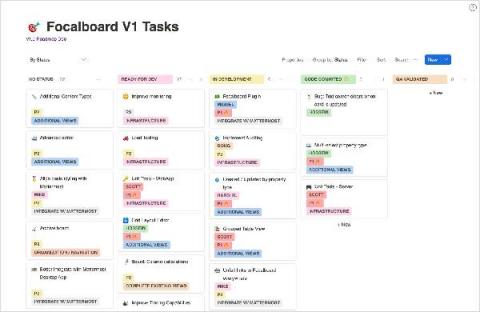
We created Focalboard to be a self-hosted, open source alternative to tools like Trello, Notion, and Asana. One of the most common use cases for each of these tools is managing projects. When we looked for a project management solution to coordinate the development of Focalboard itself, the choice was clear: We would use Focalboard to build Focalboard (just like Mattermost uses Mattermost to build Mattermost).

How to Monitor Full-Stack Django Applications

Modern web applications can be complex. A typical application stack usually involves several components spread across different layers. For example, HTML5 and AngularJS can make up a site’s front end. User inputs and queries from the front end can be passed on to containerized microservices running on a middleware, which in turn could pass the queries to a back-end database. Systems like WAFs and LDAP servers can be used for security and authentication.

A DBA's Habit for Success: CMMI (Part Five)

We’ve reached the final piece of our five-part series, and while I’m sad to end it, I hope you or your DBA teams have learned enough to move forward with the Information Management Maturity Model (IMMM). Although there are five steps to this model, several DBAs stop at the fourth. It’s common for large organizations to give this step to management and higher-ups, rather than DBA teams.

Developer, Transform Yourself: Digital Transformation Starts with You

As technical professionals we spend a lot of time developing technical skills. Checking the right boxes of experience with languages, tools, and technologies is what typically lands us a job interview for our specialty. But what wins the job in DevOps — and carries you to success in it — are your human skills. Even more than technical chops, personal traits like mindset, communication skills, and work habits are your strongest assets in making DevOps work.

Transforming Network Monitoring For The "Everything-As-A-Service" Era

Modern applications enable enterprises to scale faster with better efficiency and resilience. The main advantage of a multi-cloud/hybrid cloud infrastructure is in its highly distributed architecture that offers proximity – bringing end users closer to the service provider.

The Era of Hybrid Work Is Here: What Does it Mean for Ops Teams?

The largest remote working experiment the world has ever faced is entering a new phase as the era of hybrid work begins. For IT and DevOps teams on the frontline, this is a time of enormous pressure. Along with its many benefits, hybrid working can also bring considerable disruption. Enabling and supporting the hybrid model is the next big challenge facing organizations around the globe. We wanted to find out what this new reality means for these teams.

Data Availability Isn't Observability

But it’s better than nothing… Most of the industry is racing to adopt better observability practices, and they’re discovering lots of power in being able to see and measure what their systems are doing. High data availability is better than none, so for the time being, what we get is often impressive. There’s a qualitative difference between observability and data availability, and this post aims to highlight it and orient how we structure our telemetry.

Achieving the 8 guiding principles of the DOD's Data Strategy with Elastic

A modified version of this blog post appeared in the June 2021 issue of Signal magazine. Decisions that need to be made in an instant require answers in real time, but existing big data systems are unable to return queries quickly enough for real-time analytics. And with growing data being queried by more connected users than ever before, it’s getting increasingly challenging to maintain fast reaction times.