Operations | Monitoring | ITSM | DevOps | Cloud

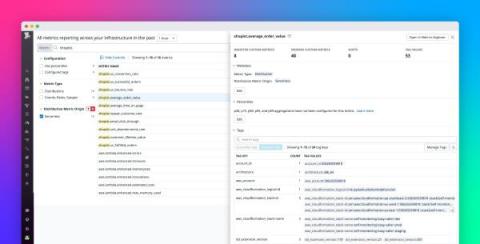
Monitor custom serverless metrics with the Datadog Lambda extension

When building serverless applications on AWS Lambda, Amazon CloudWatch provides out-of-the-box metrics that measure the performance, errors, and duration of your functions. Although these standard Lambda metrics provide visibility into your serverless applications, it can also be invaluable to monitor custom metrics that are unique to your use case and application.


Kafka Security - First Steps

Apache Kafka provides an unified, high-throughput, low-latency platform for handling real-time data feeds. Installing Apache Kafka, especially the right configuration of Kafka Security including authentication and encryption is kind of a challenge. This should give a brief summary about our experience and lessons learned when trying to install and configure Apache Kafka, the right way.

Icinga DB Web: Combined permission and restriction management

Last week we released the final first version of Icinga DB and its web interface module Icinga DB Web. Icinga DB Web offers many new features and a completely new design. The monitoring module has its limitations when managing a role, as it handles permissions and restrictions separately. This means that the permissions for a role are not related to the restrictions of the role To understand this better, here is an example.

Continuous Profiling: A New Observability Signal

We’ve all grown used to logs, metrics and traces serving as the “three pillars of observability.” And indeed they are very important telemetry signals. But are they indeed the sum of the observability game? Not at all. In fact, one of the key trends in observability is moving beyond the ‘three pillars: One emerging telemetry type shows a particularly interesting potential for observability: Continuous Profiling.

Accelerating cloud migration to Microsoft Azure using the Now Platform

With more than 7,000 customers and double the number of employees ServiceNow had four years ago, our digital technology (formerly IT) operations team faced increased demand for compute, storage, and bandwidth. At the same time, we had to maintain tight security controls. We embrace a three-zero strategy: zero unplanned outages, zero physical footprint, and zero user-reported incidents.

What Does ISO 20000 Stand for?

ISO 20000 is the only internationally accepted standard for ITSM, and it has seen significant adoption since it was first introduced in 2005. In fact, a 2020 survey shows more than a 40% increase in certifications globally. The fact that it has a remarkable ability to work with other ITSM frameworks is one of the main reasons for its widespread adoption. So, here we’ll explore its capabilities, benefits, as well as the extent of the ISO 20000 certification.

Link Monitoring: A Comprehensive Guide to Network Optimization

Links are the plugs, sockets, cables, and electrical signals traveling through a network. Every link implies a function. At the hardware level, electronic signals activate functions; data are read, written, transmitted, received, checked for error, etc. At the software level, instructions activate the hardware (access methods, data link protocols, etc.). At higher levels, the data transferred or transmitted may request functions to be performed (client/ server, program-to-program, etc.).