
Operations | Monitoring | ITSM | DevOps | Cloud

Take Your Pick! The Best Server Monitoring Tools on the Market

IT professionals are always presented with myriad solutions when seeking additional software for their network infrastructure. When it comes to server monitoring solutions, there are multiple options available. After all, every organization has its own needs, individual infrastructure and software requirements. With that in mind, the following list is a guide to help IT professionals select what they believe may be the best possible server monitoring solution for their organization.

What even is DevRel?

DevRel is short for Developer Relations. Developer Relations is exactly what it means, a marketing policy that prioritizes relationships with developers. In general society, there is a word known as PR (Public Relations); you could say DevRel is the developer version of this. Its definition is very simple. People who do DevRel often have a technical background, having worked in the industry before switching to their role, but that is not a requirement.

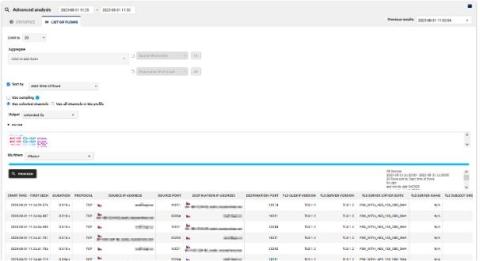
Monitoring TLS Network Traffic for Non-FIPS Compliant Cipher Suites

FIPS compliant cipher suites hold the U.S. government's seal of approval, guaranteeing their suitability for federal systems. On the other hand, non-FIPS compliant cipher suites may present security vulnerabilities due to outdated cryptographic algorithms and potential lack of perfect forward secrecy. As a result, it becomes paramount to monitor TLS network traffic for non-FIPS compliant cipher suites.

Deploy fully configured VMs in minutes on Google Cloud, using gcloud CLI and cloud-init

Every public cloud provider has a templating mechanism to deploy fully configured applications. For anyone interested in a vendor-neutral approach that works on major public clouds, cloud-init offers a good solution. Cloud-init makes your work re-usable regardless of the clouds you deploy to. It’s an open source configuration automation solution for Linux, which performs steps at various stages of a single machine’s boot up.

Day 2 Navigate Europe 2023 Wrap Up

We kicked off the start of the Day 2 with our host Nigel Poulton as he prepared us with a quick rundown of the highlights from the first day before giving attendees a taste of what to expect from the rest of the event. After this point, Nigel brought Kelsey Hightower to the stage for his keynote session with Mark Boost and Dinesh Majrekar. If you missed our Day 1 recap, check it out here.

Effective Logging in Threaded or Multiprocessing Python Applications

In Python development, logging is not only good practice; it is vital. Logging is critical for understanding the execution flow of an application and helps in debugging potential issues. The importance of logging for developing reliable and maintainable Python applications cannot be overstated. Python provides capabilities for running concurrent operations—either in a threaded (single process) or multiple process environment. But what implications do these different approaches have on logging?

Amazon RDS: managed database vs. database self-management

Amazon RDS or Relational Database Service is a collection of managed services offered by Amazon Web Services that simplify the processing of setting up, operating, and scaling relational databases on the AWS cloud. It is a fully managed service that provides highly scalable, cost-effective, and efficient database deployment.

Top 5 Server Monitoring Tools

The need to monitor the health of servers and networks is unanimous. You don't want to be a blind pilot who is headed for an inevitable disaster. Fortunately, there are many open source and commercial tools to help you do the monitoring. As always, good and expensive are not as attractive as good and cheap. So, we've put together the most valuable cloud and windows monitoring tools to get you started.

Correlation Does Not Equal Causation - Especially When It Comes to Observability [Part 1]

Observability has been tied up with causality from its origins in the mathematical realm of control theory in the early 1960s. A system (of any kind, hardware or software, natural or engineered) was deemed to be ‘observable’ if it generated self-descriptive data from which it was possible to infer how states of the system were causally related to one another.