Operations | Monitoring | ITSM | DevOps | Cloud

Understanding business and security risk

Even if an organization has developed a governance team, aligning integration decisions with business needs must be incorporated into the zero trust architecture. The company’s business model drives the applications chosen. The senior leadership team needs someone who can translate technology risks and apply them to business risks. For example, security might be an organization’s differentiator.


Controlled Unclassified Information: Top 4 Management Tips

In 2010, the United States government mandated an order to safeguard sensitive information it created or owned. Unlike classified information which can be accessed by only a few key people, unclassified information can be accessed by many governmental and non-governmental bodies. Therefore, this information can't be termed as classified, but it still requires controlled access and dissemination due to its sensitive nature. Hence the name, Controlled Unclassified Information (CUI).

A network admin's guide to network diagram software

For organizations growing larger by the day, network management becomes increasingly complex, and scaling to meet this growth can be a major headache. To battle such complexity without a graphic representation of a network is a tiresome task, which is where network diagram software comes in. Network diagram software allows a network admin to portray the network clearly and legibly through detailed graphics.

Digital transformation is changing banking from the inside out

The increasingly frictionless consumer banking experience didn’t happen by accident; it arose from foundational technology and culture shifts within banks toward a more digital mindset. Companies across all industries are faced with the urgent need to transform the way they do business, including financial services, but changes abound with governance, security, and culture.

How Puppet supports desktop and laptop automation in a changing world

The world has changed since I started out on a help desk in Colorado 25 years ago. In those long ago years, a company’s desktop machines actually lived under the desks of many in the organization (and often doubled as a foot warmer!) and configuration was done machine by machine manually, or maybe even by some script that was created to run at login if we were lucky. If there were laptops in use by the business users, they were a lot less mobile and rarer than in today’s business world...

Podcast: Break Things on Purpose | Tomas Fedor, Head of Infrastructure at Productboard

Tomas Fedor, Head of Infrastructure at Productboard, is here to talk about his personal passions and professional perfections. Tomas takes us through some of his biggest adaptations he had to make when adopting the cloud. He also tackles the complexities of working through his POC process, and how to keep consistencies across various teams. Teams are a central focus for Tomas as well, and his techniques and experiences in growing and leading specific technical teams is insightful.

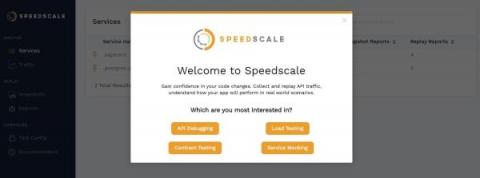
Play with the Speedscale - no registration required

For the first time, Kubernetes engineering teams interested in learning more about Speedscale will be able to play with the framework without registering, at play.speedscale.com. Engineers can see firsthand how you: While users won’t be able to actively watch replays run, there are a variety of pre-created traffic snapshots, reports and configs to browse. Engineers will be able to experience the ease with which snapshots are generated for fast, scalable test automation.

Why we created a Prometheus Agent mode from the Grafana Agent

On 2021-10-29, initial support for Prometheus Agent was merged, and it is slated for inclusion in Prometheus v2.32! This feature has a bit of a lengthy history to it: It took a little while to get to where we are today, but I’m thrilled that we were able to use the Grafana Agent code to enable agent-like functionality in the prometheus/prometheus repository.