Operations | Monitoring | ITSM | DevOps | Cloud

Network Throughput vs Bandwidth and How to Measure It

Have you ever used the term bandwidth? Probably. Have you ever used the term network throughput? Maybe. Have you used them interchangeably? Most likely. So let’s see where we get these mixed up. Namely, let’s look at the key differences between network throughput and bandwidth. And while we’re at it, let’s cover the fundamentals of throughput and how to measure it, so you can keep your network flowing efficiently and cleanly.
Running an open source multi-cloud with Ubuntu, LXD, and Mist

One of the advantages that Ubuntu brings to the cloud equation is improving an organization’s ability to run in multiple clouds. Running containers on top of Ubuntu further increases portability. Mist is an open-source multi-cloud management platform that helps teams centrally manage and control their Ubuntu instances across many different cloud environments and/or bare metal. This removes some of the operational and financial barriers to running applications in multiple clouds.

5 Best Application Modernization Strategies

To keep up with today’s competitive landscape and with the new normal induced by the pandemic, organizations must modernize their ventures, instigate innovation and be more agile. However, the process of replacing legacy systems isn’t precisely as agile as one thinks it would be. It takes time, and that’s something your company doesn’t have. You need solutions that consolidate years of transformation into mere months.

From ITSM to enterprise service management

More and more organizations are embracing digital evolution to improve processes and increase productivity. The Environment Protection Authority (EPA) Victoria, a state government agency in Australia, is one such organization. EPA Victoria embarked on a large-scale digital transformation journey three years ago to reinvent its operations, its interactions with the public, and its approach to environmental protection in the state of Victoria.

Painless Kubernetes monitoring and alerting

Kubernetes is hard, but lets make monitoring and alerting for Kubernetes simple! At iLert we are creating architectures composed of microservices and serverless functions that scale massively and seamlessly to guarantee our customers uninterrupted access to our services. As many others in the industry we are relying on Kubernetes when it comes to the orchestration of our services.

AIOps POC no longer have to be long and resource intensive

Gartner predicts that large enterprise exclusive use of AIOps and digital experience monitoring tools to monitor applications and infrastructure will rise from 5% in 2018 to 30% in 2023. And this prediction is soon turning into a reality. AIOps is showing promising business value as it impacts measurable metrics such as mean time to detect (MTTD), mean time to acknowledge (MTTA), mean time to restore/resolve (MTTR), service Availability, percentage of automated versus manual resolution, and so on.

How to find duplicate BLOBs in your Azure Storage Accounts

Azure Storage is like an all you can eat buffet, except the more you eat, the more you pay! This has provided organisations an almost limitless supply of storage, and as we all know, the more that’s available, the more we’ll use. Azure Storage has changed the way many organisations operate both in terms of availability and service.

What's new in Grafana Enterprise Metrics for scaling Prometheus: enhanced access control and a compactor that supports 650 million active series and beyond

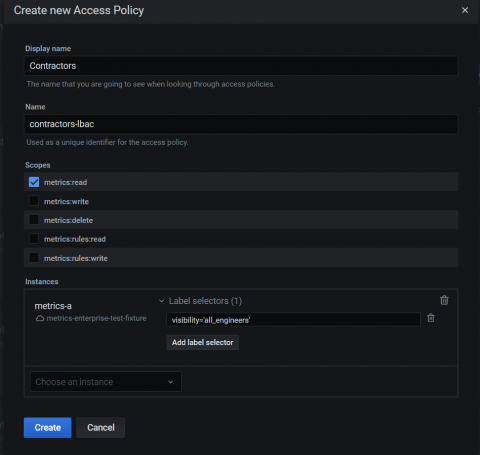
I’m a fresh starter here at Grafana Labs, leading one of our teams working on the Grafana Enterprise Stack. As a longtime user of Grafana, I couldn’t wait to see what’s new in versions 1.1 and 1.2 of Grafana Enterprise Metrics (GEM), our scalable, self-hosted Prometheus service. I tried out the shiny features and wanted to share some of the cool things I found.

Three Steps To Get Started With Database DevOps

Once you’ve committed to changing your culture in order to automate your database deployments, what’s next? You’ve already done the hard part, making the decision to shift the culture. Now, what’s involved is just lots of labor. There are three things you can do to begin your Database DevOps journey: Let’s discus these in detail. It’s important to understand, not just why these are your first three steps, but why they should occur in this precise order.