Operations | Monitoring | ITSM | DevOps | Cloud

The New Ivanti Browser Management

A targeted approach to improving users’ browser experiences while minimizing the impact on IT As today’s modern IT estates see an exponential increase in the use of SaaS-based applications year-over-year, many of those applications are being accessed through the browser. The ability to manage browser usage, data, and synchronization has become critical to positive experiences for local, mobile, and remote users.

How To - Monitor IoT with Catchpoint

In this How-To, we’re going to look at a specific Catchpoint synthetic monitor that helps you analyze the health of systems built around the Internet of things (IoT). Now, IoT is obviously a huge category, so in this case, we’re going to look at systems that utilize the Message Queuing Telemetry Transport or MQTT for short.

Getting Started with Java & OpenTelemetry

It’s easy to get started with Java and Honeycomb using OpenTelemetry. With Honeycomb being a big supporter of the OpenTelemetry initiative, all it takes is a few parameters to get your data in. In this post, I will walk through setting up a demo app with the OpenTelemetry Java agent and show how I was able to get rich details with little work by combining automatic instrumentation from the agent with custom instrumentation in the code.

Top 5 SIEM trends of 2021 and how Elastic Security solves them

Security information and event management (SIEM) systems are centralized logging platforms that enable security teams to analyze event data in real time for early detection of targeted cyber attacks and data breaches. A SIEM is used as a tool to collect, store, investigate, and report on log data for threat detection, incident response, forensics, and regulatory compliance.

What is IT Monitoring?

IT monitoring involves the use of a combination of technologies to simultaneously ensure IT equipment performs as expected and resolve any identified IT problems. The capabilities of IT monitoring technologies vary; some technologies can perform a basic assessment of equipment across an IT environment, while others can automate the identification and remediation of equipment issues. Your business can leverage monitoring technologies, but optimizing their value requires careful evaluation.

AlertOps Automation

AlertOps is built for today’s fast paced enterprise. Managing an incident can many times be a chaotic time, so a streamlined workflow, that automatically routes to the next step in your business process, helps resolve the issue at hand quickly. End to end automated workflows, aided by rules engine, allow you to optimize your processes and manage tasks efficiently.

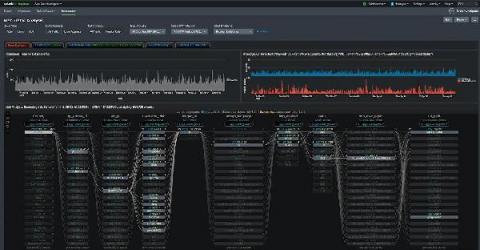
Advanced Link Analysis: Part 1 - Solving the Challenge of Information Density

Link Analysis is a data analysis approach used to discover relationships and connections between data elements and entities. This is a very visual and interactive technique that can be done in the Splunk platform – and is almost always driven by a person, an analyst or investigator, to understand the data and discover necessary insights specific to the business problem at hand.

Introducing Splunk OpenTelemetry Java Lambda Wrapper

AWS Lambda has become a core technology in the shift to cloud-native application development, eliminating infrastructure management and fixed costs. But there are trade-offs with serverless environments. Not having access to the production infrastructure can make debugging difficult and there are a lot of moving parts, adding distributed complexity. Monitoring serverless functions in production requires observability beyond CloudWatch logs and metrics.

A Stunning Cloud Mistake Too Many Companies Are Making

Cloud migration is, more often than not, treated as a one-way street where organizations migrate applications and workloads from on-premises to a public cloud, or less often, from one public cloud to another. But a key finding in our recent State of Hybrid Cloud survey of 350 IT professionals with cloud decision influence/authority is that a whopping 72% of participating organizations stated that they’ve had to move applications back on-premises after migrating them to the public cloud.