Operations | Monitoring | ITSM | DevOps | Cloud

Network Usage Visibility from the Free InfluxDB sFlow Monitoring Template

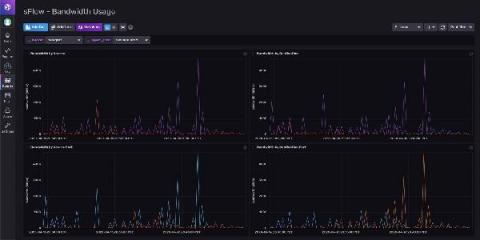
As business-critical applications increasingly rely on network services, even a minor change in network usage can impact network performance and reliability, thereby also impacting business functions and network maintenance costs. sFlow (short for “sampled flow”) — by providing unprecedented visibility into network usage and active routes of high-speed and complex networks — delivers the data needed to effectively control and manage network usage.


Slack outage 2021 welcomes everyone back to work

It’s a new year and what better way to start working from home for the 10th month of the pandemic than with a Slack outage. For more than 3 hours on Monday 4th January, Slack users were left to fend for themselves with the use of none other than emails! to communicate with their teams – a notion that was surely lost by the 2010’s.

Getting to know IT asset management

It’s funny how once you are officially in a department such as IT, everyone assumes you have deep knowledge about everything from resetting a printer to spooling up a complex cloud dev instance. And as time goes by, it gets harder and harder to admit unfamiliarity about certain areas of techdom. Take IT asset management (ITAM), for example. Yes, we all know what software is. We know what a laptop or desktop computer is.

Sponsored Post

Boost IT Savings with CloudReady and Incident Workflow

Companies love data. Aggregating data from multiple sources makes decision-making easier and brings a new depth of the conversation to business meetings. But all of this is at the management level. IT managers and administrators also search for data from multiple sources to ensure that the ecosystem works. Companies demand the continued maintenance and availability of mission-critical applications. Without a framework or incident workflow, revenue can suffer, and customers churn if the company does not proactively address problems that arise in its infrastructure.

User-defined functions in Multi-Step API Monitoring

When it comes to monitoring your API, you need a tool that has the flexibility to handle the complexities of a modern website or app. Uptrends’ Multi-step API gives you the power to interact with API endpoints, evaluate the results, reuse response data, create automatic variables, track custom metrics, and now transform response data with user-defined functions.

Adding even more uptime check locations to Oh Dear

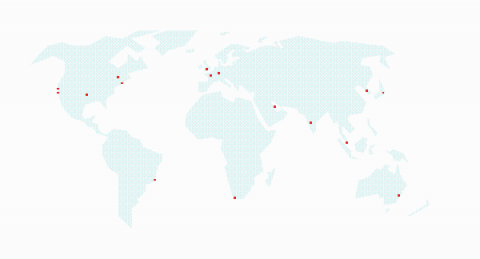
We're starting this new year strong with an additional new 8 locations to check your websites from! We've just finished adding uptime capacity in the following locations. That's 8 new locations to configure any website monitoring from! In all our previous locations, we've increased our server capacity to support our continued growth.

Case Study: How Railway Corporation Unleashed Economies of Scale with Motadata

Motadata enabled a railway corporation, with headquarters in Navi Mumbai, Maharashtra, under the brackets of Ministry of Railways to monitor, analyze and resolve IT operational issues to establish a centralized modern infrastructure in their project. The project is one of the India’s most ambitious railway projects that runs through coastal western India, linking Mumbai to the western region of Goa and Mangalore. It covers about 170 railway stations under its remit.

Hacked! Solve the Dreaded DevOps Problem With This

Hacks that make headlines are painful for everyone involved, but with some clever preparation and web monitoring at your side you can avoid the worst of this pain. Those who have been victimized face a steep uphill battle to reclaim trust and authority. Unwitting victims, like customers and end users, suffer downtime or leaks containing personally identifiable information. If your eye is not on security, your organization is inviting these kinds of attacks.

IoT monitoring with Grafana: How Eurac observes climate change in the Alps

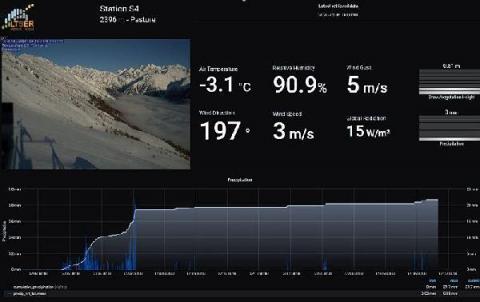
In 2014, the Mazia (Matsch) research site in the Italian Alps was officially accepted as a Long Term Socio Ecological Research LT(S)ER site. The monitoring infrastructure is operated by Eurac Research and the University of Bolzano and consists of 24 automatic microclimatic stations in a mountain ecosystem across an elevation gradient ranging from 1,000 m to 2,700 m, logging several meteorological and biophysical variables every 15 minutes.