Operations | Monitoring | ITSM | DevOps | Cloud

Correlation Analysis: A Natural Next Step for Anomaly Detection

Over the last decade, data collection has become a commodity. Consequently, there has been a tremendous deluge of data in every area of industry. This trend is captured by recent research, which points to growing volume of raw data and growth of market segments fueled by that data growth.

Server Monitoring with OpsRamp

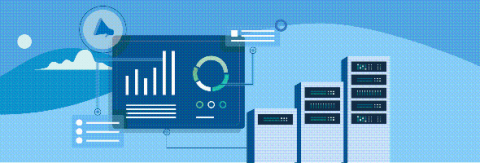
For decades, compute or server infrastructure has been the backbone of the IT world. Compute has gradually evolved from on-premise hardware to programmable compute in the form of software containers. Technology operators need to constantly monitor the performance of their Windows, Linux, and container infrastructure so that they can optimize their compute environments to match workload demands.

5 Great Reasons to Store and Analyze Centralized Logs

Whether you’re trying to troubleshoot a problem, defend against attacks, or simply optimize your environment, event logs are your best source of information. More than that, not logging or ignoring your logs is like not checking your blindspot when you’re changing lanes—sooner or later you’re going to seriously regret it because the effects will be disastrous.

7 Wins That Helped IT Save its Work-From-Anywhere Program

I think I have been reading way too many “doom and gloom” articles this year about IT. For many companies, the switch to a prolonged work-from-anywhere (WFA) model has exposed serious cracks within their IT infrastructure. To be honest though, the cards have been stacked against IT for some time and 2020 was just the tipping point. Employees often resist new work technologies and there’s mounting evidence to prove that IT tends to overestimate how well their services are received.

Security corner: snap interface & snap connections

One of the defining features of snaps is their strong security. Snaps are designed to run isolated from the underlying system, with granular control and access to specific resources made possible through a mechanism of interfaces. Think of it as a virtual USB cable – an interface connects a plug with a slot. Security and privacy conscious users will certainly be interested in knowing more about their snaps – what they can do and which resources they need at runtime.

Why Admins HATE Their Backups

Many of us hate our backup environments. That’s because backups kind of suck, even with a backup product as great as IBM Spectrum Protect. As I said in another post, it’s the thing that everyone needs, but no one cares about, and most definitely can make your life crappy. Ask any backup admin, and I know they’ll agree. Go ahead; I’ll wait. Yep, they said the same thing, didn’t they?

TL;DR InfluxDB Tech Tips - How to Extract Values, Visualize Scalars, and Perform Custom Aggregations with Flux and InfluxDB

In this post, we learn how to use the reduce(), findColumn(), and findRecord() Flux functions to perform custom aggregations with InfluxDB. This TL;DR assumes that you have either registered for an InfluxDB Cloud account – registering for a free account is the easiest way to get started with InfluxDB – or installed InfluxDB 2.0 OSS. In order to easily demonstrate how these functions work, let’s use the array.from() function to build an ad hoc table to use in the query.

Dashboards Beta v0.7: Export Dashboard to PNG/PDF and Self-Service Install for Splunk Cloud

If you’re new to the Dashboards Beta app on Splunkbase and you’re trying to get started with building beautiful dashboards, this "Dashboards Beta" blog series is a great place to start. The Splunk Dashboards app (beta) brings a new dashboard framework, intended to combine the best of Simple XML and Glass Tables, and provide a friendlier experience for creating and editing dashboards.

When It Comes to Security of the Platform, We Mean Business. Here's How.

At Splunk, we understand that a secure platform is a trustworthy one. We strive to implement a protected foundation for our customers to turn data into action, and part of that effort is giving you more frequent insight into the security enhancements that we’ve made to the platform. In this blog series, we’ll share the latest enhancements to Splunk Enterprise, review our security features in depth, and explain why these updates are important for you and your organization.

Monitor AWS Step Functions with Datadog

AWS Step Functions is a service that abstracts distributed applications into state machines, with each state representing a component of an application. Not only does this automatically generate an architectural diagram of your application’s workflow, it also makes it straightforward to reorder your states as well as implement parallel execution, retries, and other tasks.