Operations | Monitoring | ITSM | DevOps | Cloud

4 Steps to Making Observability Real for Your Team

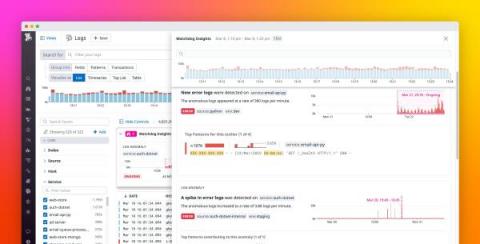
Without unified observability, it’s stressful not having complete visibility into your application. Plus, it contributes to risky deployments. Yet we hear that many developers have poor visibility into what powers production code. Without transparency into their apps, developers cannot see: You can try navigating tickets, permissions, and dashboards that don’t tell the right story, but there are ways to solve this problem.

Auvik Rollup & Roadmap Update - Q4 2021

Patrick Albert, VP Product Management, and Julie Forsythe, VP Engineering discussed the latest Auvik developments and handy new features in our Q4 2021 Rollup & Roadmap Update. See what's new, from Discovery Dashboard, syslog, and device information improvements to certification updates for SAML SSO admins to out-of-the-box identification support for 40 more devices, and get a sneak peek into what we're working on to improve your troubleshooting experience and product extensibility.

Nexthink Secures Series D Funding - Valuation of $1.1 Billion!

Watch now to hear Nexthink’s CEO and Co-founder Pedro Bados announce an important milestone for Nexthink: raising $180M in a Series D round and garnering a $1.1B valuation. Accelerated innovation and further customer success is on the horizon following this announcement. Find out more about what this means for Nexthink’s future and the future of Digital Employee Experience.

New feature in Loki 2.4: no more ordering constraint

A new version of Loki was released back in November, and I’m here to talk about one of its most exciting features. Loki 2.4 finally removed the requirement that all data must be ingested in timestamp-ascending order. Instead, Loki now allows out of order logs up to a configurable validity window (more to come on that). In this post, I’ll walk through what all this means and why we’re thrilled about it.

Live from AWS re:Invent - Data Drivers & Racing as a Service

Presenter: Cory Minton - IT Strategist Splunk believes that every problem has an answer in data and esports racing is no different! Join this session to see how Splunk partnered with McLaren Shadow Esports to bring critical insights to the services that matter most in SIM racing with Splunk Cloud in AWS.

Unit testing vs integration testing

Software is one of the most complex tools invented for practical use. One misplaced character can break an entire application. So, careful testing is an essential requirement before publishing any code. In this article, you will learn about two fundamental types of software testing, unit testing and integration testing, and how your team can implement them in your CI/CD pipelines to validate your code quickly and deliver new features to your users with confidence.

Preparing your team for continuous deployment

A key goal for any DevOps team is to shorten the software development cycle and provide continuous delivery of high-quality software. Instead of continuing to the next logical goal, continuous deployment, most companies stop here. Developed code reaches the testing phase automatically, then, successful testing triggers a manual acceptance step. Only then is the application deployed into production.