Does your professional services firm invest in customer success? Studies reveal that customer-centric firms are 60% more profitable than their peers. That explains how important customer success should be to your business. Particularly, those offering professional services because such firms thrive on long-standing relationships with their customers.
We are pleased to announce the immediate availability of a new update (8.7.3) for the Alloy Software ITSM/ITAM platform, including Navigator, Navigator Express, and Discovery. This maintenance update resolves issues reported in previous versions, offers Apple M1 Chip support, and expands API integration capabilities. For detailed information about all changes in this update, please see Release Notes on the Alloy Documentation Portal.
Does your work involve a lot of ITOps Monitoring? If so, chances are you have developed a roadmap for 2021 that addresses digital business disruption, application and infrastructure changes, and the ongoing global pandemic… And here’s an opportunity to incorporate expert advice into your plan.
‘Enterprise class’ is a buzzword that refers to applications that are designed to be robust, flexible, and scalable for deployment by a large organization. There are no firm standards for what makes an application or platform enterprise class, but enterprise-class applications are generally: When any product is developed, there are assumptions made. These assumptions dictate how widely the tool can be deployed and what constraints it has during usage.
In this article, we’ll be rewinding back to the very beginning of the AWS Well-Architected Framework to understand how and why it came to be, and why is it of utmost importance, but very often underrated, for serverless developers to learn, understand and apply this framework of best-practices. We’ll also be looking into how the framework has evolved and how it should be used in 2021.
In this episode of Coffee & Containers, North American DevOps Group‘s Jim Shilts speaks with Shipa‘s Bruno Andrade and Fiserv‘s Ken Owens. The topics covered include.
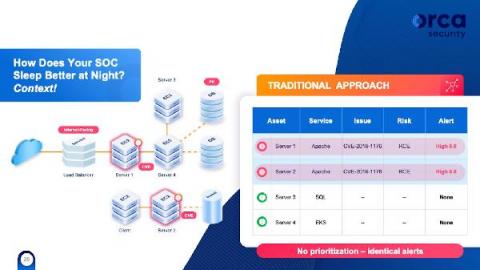
The sheer number of cyberattacks launched against organizations every year is massive and growing. If you’re a security analyst working in a SOC or security team, tasked with defending your organization, that means you’re getting bombarded by many more attacks than the recorded numbers above would suggest. These attacks translate into security alerts — fired from your various security tools — that you must investigate and resolve.