Operations | Monitoring | ITSM | DevOps | Cloud

Why Your Business Should Consider Private And Direct Connections To Google Cloud

Although it entered the market later than Amazon and Microsoft, Google Cloud has established itself as one of the top 3 mainstream public clouds through its Platform-as-a-Service (PaaS) and Infrastructure-as-a-Service (IaaS) offerings, with a strong presence in Machine Learning, data analytics and AI (Artificial Intelligence). Google has also become known for an attractive pricing model for its cloud services.

Using SQL Clone with Githooks & Branch Policies in Azure DevOps

Switching branches quickly and testing Pull Request code when working on database changes is no easy thing, but fear not! Join Chris Unwin in this video to find out how you can set up SQL Clone to allow developers to preserve changes when switching branches, and how teams can review code against a live DB, rather than relying on the raw code in version control.

Credential management best practices for business process automations

This webinar recording gives you a clear picture of the various credential-related perils that can surface because of implementing business process automation (BPA) workfows in your enterprise. Ganesh, our in-house IT security expert will walk you through the risks associated with hard-coding privileged credentials within application scripts and also provide you with a handful of security best practices to mitigate the risks and fortify your IT infrastructure from credential exposure through PAM360.

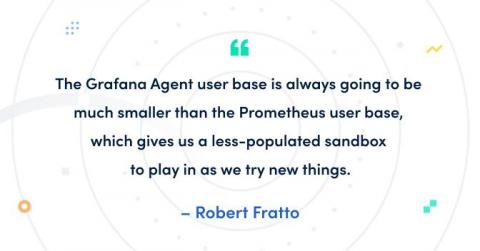
How we're graduating Grafana Agent experiments into the official Prometheus project

We’ve been experimenting with new ways to use and operate Prometheus over the past year. Every successful Grafana Agent experiment turns into an upstream contribution for the whole Prometheus community to benefit from. In this blog post, I go over the history of the Agent’s successful — and not so successful — experiments.

Continuous integration for React Native applications

Apache Cordova, since its release in 2009, has created a paradigm shift for mobile application development. Before Cordova, only developers who knew platform dedicated languages for a particular type of mobile operating system could develop native mobile applications. There was Objective-C for developing iOS apps, or Java for Android apps and platforms like Blackberry. Windows Phone also had languages dedicated to building their mobile applications.

Using Policy Analyzer to develop and debug CFEngine policy

I have a setup at home where I keep a local git server running on a Raspberry Pi 3 which contains personal/work journal, dotfiles and a personal policy repository. It was set up manually so before adding a new git repository for a family password store I set about retrofiting the configuration in CFEngine. The goal in this blog is to ensure that what I have already is managed by CFEngine and that what I want to add, /srv/git/passwords.git, is created.

How Eliminating Network Choke Points Can Help the DoD Plan for the Next Wave of the Pandemic

At the start of the COVID-19 pandemic, military IT leaders raced to expand network capacity and upgrade infrastructure to ensure it could meet their mission-critical workloads and support telework. Their successful efforts have established a proof of their own abilities to adapt and scale their networks with speed and agility. As more DoD personnel telework and government and home networks are pushed to the max, here are three things they must consider as plans for the impact on IT systems.

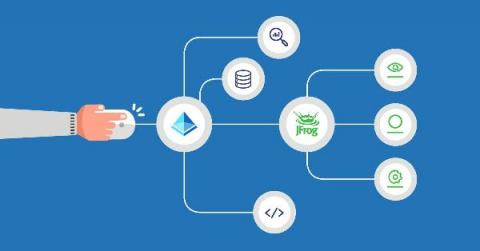
Boost Permissions Management with JFrog on Azure through Active Directory SSO

When you’ve chosen Microsoft Azure to host your JFrog Cloud Enterprise or Enterprise+ subscription, you’ll naturally want to make good use of the services Azure provides for security and user administration. DevOps security starts with who has access to your builds, releases, and automation.