
Operations | Monitoring | ITSM | DevOps | Cloud

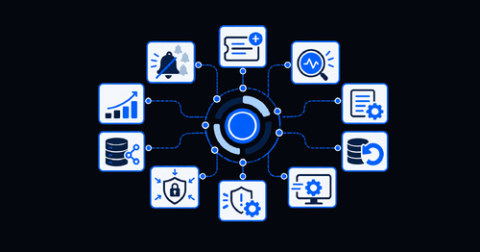
10 AIOps Automation Use Cases Transforming IT Operations

AIOps is often discussed as a broad technology category. That framing can make it difficult for an IT operations leader to connect the concept with the problems consuming the team’s time today. The practical question is simpler: Where does your team repeatedly lose time between detecting an issue and resolving it? Maybe engineers are drowning in alerts.


How Datadog defines service criticality at scale

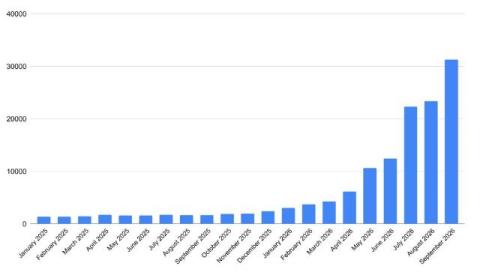
Datadog runs thousands of internal services and has been increasing global footprint year after year. For most of that growth, we treated services uniformly when making deployment and reliability decisions. At our current scale, that approach became expensive. A change destined for production rolls out to data centers sequentially, so deployment time grows with every data center we add.

SFTP vs TFTP: Differences and Security

SSH File Transfer Protocol (SFTP), also known as Secure File Transfer Protocol, and Trivial File Transfer Protocol (TFTP) have similar acronyms but have two different jobs. Choose SFTP for sensitive files, routed or untrusted networks, authenticated automation, partner exchange and remote file management. Reserve TFTP for constrained bootstrapping or device-transfer workflows on a tightly controlled network when the endpoint requires a minimal design.

The Root Cause Agent: Bring an agentic approach to observability

For years, engineering teams have faced the same challenge during incidents: the systems generating alerts are becoming more complex, but the investigation that follows is still largely manual. Monitors are good at telling us that something is wrong. The harder question is why. When an alert fires, an engineer still has to work out where to look, which signals matter, what hypothesis to test, and how the evidence across logs and metrics fits together.

Introducing DojoAI Credits: Flexible, predictable AI pricing built for scale

AI agents are quickly becoming the first responders on the most sophisticated SecOps and DevOps teams, pulling threads on a threat or making sense of a flood of telemetry before a human even logs in. But most AI pricing hasn’t caught up. Token-based models leave you burning through usage with no visibility into what’s driving the cost, while per-seat caps ration access like AI is still a nice-to-have instead of core to how your team operates.

Inside a governed software factory: Harness and Cosmos

Learn how Harness and Cosmos build trusted, governed software factories with automated, end-to-end agent orchestration and pipeline security. Software factories can greatly accelerate software development, but concerns about trust, governance, and predictability are limiting how broadly organizations deploy them.

FinOps for Banks: Best Practices & Cost Control

Discover FinOps best practices tailored for banks. Optimize cloud costs while meeting compliance and security needs. Learn more. Financial institutions face unique challenges implementing FinOps due to strict regulatory compliance, security requirements, and complex legacy systems. This guide covers proven FinOps strategies for banks including cost allocation, governance frameworks, and automated controls that balance innovation with risk management while optimizing cloud spending.

Agentic code is changing how we think about code quality

Discover how Harness Builds combines Test Intelligence, code coverage, and quality signals to help developers and AI agents validate changes faster and improve code quality. AI has changed the speed at which we can write code. Developers can move from an idea to a pull request faster, agents can work through changes autonomously, and the amount of code moving through development pipelines is only going up. But writing the code is only the beginning.

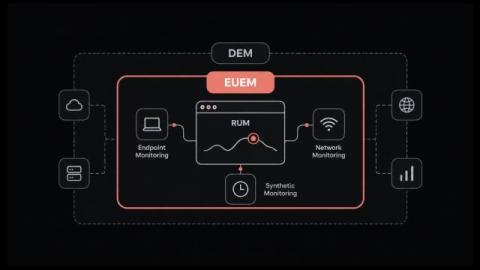
What is End User Experience Monitoring (EUEM)? How It Relates to RUM and DEM

Why do tickets about a slow application keep arriving while every server, link and service check reports normal? That mismatch is the problem end user experience monitoring exists to solve. A healthy server is one thing, but the business notices something else: whether people can finish their work or complete a purchase without delays or errors. Monitoring in most IT operations groups was built to watch the systems from the inside, so it reports CPU load, memory and uptime.