Operations | Monitoring | ITSM | DevOps | Cloud

Icinga DB Web deep custom variable filter

In this blog post I will introduce you to filtering, based on deep custom variables in Icinga DB Web. In Icinga Web 2 monitoring module, it is not possible to filter deep custom variables. Example of deep custom variables involving dictionaries and arrays: This is because in the database (IDO) the suitable structure for the custom variables is not available. The dictionaries and arrays in the custom variables are saved in json format as shown below.

How to monitor the status of external services

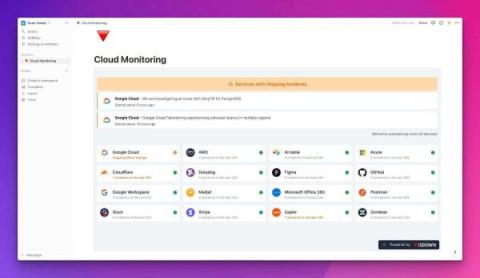
Monitoring the status of external services connected to your business is essential for providing reliable and efficient customer service. An effective way to stay ahead of any issues is by monitoring all of the services connected to your business so that you can address any potential problems before they have a chance to have a negative impact on operations. In this article, we will be discussing how to monitor external services’ status and the importance of having access to accurate data.

Manage your APIs from your internal developer portal

It is no secret that microservices architectures lend themselves to complexity. This can be a small price to pay when your workflows and processes are organized to ensure that everyone on the team is informed, accountable, and content. Setting up an internal developer portal is one of the best things you can do for the team, as it is an easy, surefire way to get your services, resources, and processes in order.

What is Internet Performance Monitoring and How is it Different from APM?

Most Internet-centric organizations today use some form of APM tools, as they should. But they are insufficient. Over the last ten years, the world has completely changed. If you think about it, in the first decade of this millennium, most businesses had an Exchange server, maybe Siebel CRM, a file share, and a range of other business apps, usually hosted in the same building. Everything was on the LAN. Today, it is the exact opposite. Everything is distributed.

Tagging & Routing at Squadcast | Incident Management | Squadcast

Event Tagging is a rule-based, auto-tagging system with which you can define customized tags based on incident payloads, that get automatically assigned to incidents when they are triggered. Auto-add relevant information like priority, severity or alert type to make incoming incidents context-rich. Route alerts to the right responder(s) based on the tags they carry

Escalation Policy I Round Robin & Advanced Escalations I Incident Assignment Strategies I Squadcast

An escalation policy is a collection of rules used to define how and when an incident should be escalated. In Squadcast an Incident escalation happens when a responder hands off the task/incident to another member, and this handoff is subject to specific rules. This video explains how to set up Escalation Policies, and Round Robin Incident Assignment Strategy in Squadcast.

Integrating Microsoft Teams & Squadcast - Acknowledge, Resolve & Reassign Incidents | Squadcast

Teams using MS Teams can now integrate with Squadcast and easily Acknowledge, Resolve & Reassign incidents using MS Teams. You can configure Squadcast to send a notification to the configured MS Teams channel as soon as an incident is triggered.